
How to Understand the Squishy Market in Brazil Before Starting a
Published on 6 min readEntrepreneurship and BusinessCompare AI models
Squishies are soft silicone toys that deform and return to their original shape, creating a relaxing motion. In Brazil, they have won over mainly children aged 6 to 12 and young adults who use them to relieve stress or as collectibles. The market is highly competitive, especially online, but there is still room for specific niches like themed or custom squishies. Most products come from China, priced between R$5 and R$30, but local production can be viable for premium items.
What are squishies and how do they work?
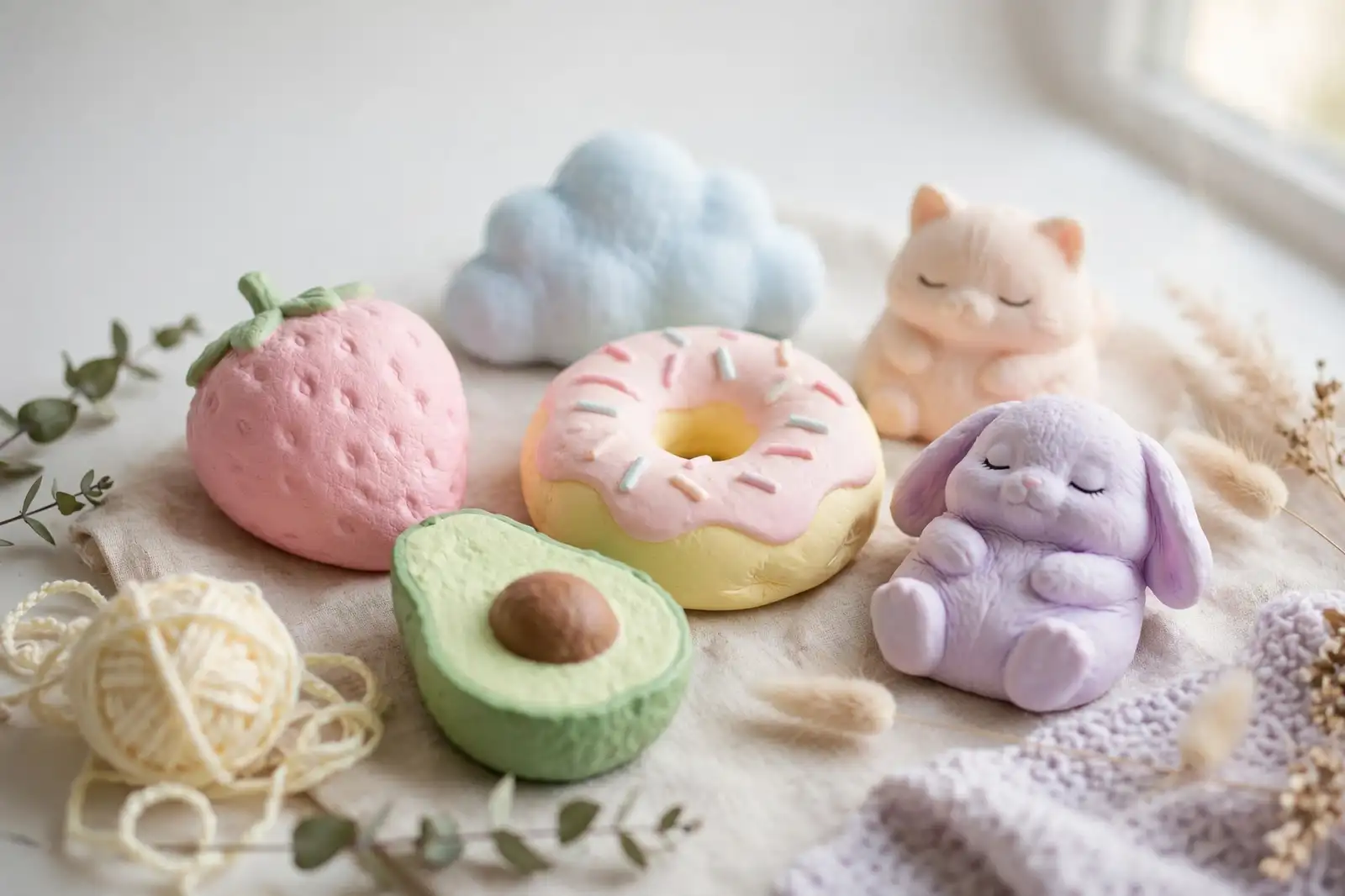
A squishy is a toy made of silicone polymer or memory foam that compresses under pressure and slowly returns to its original shape. This feature creates a therapeutic effect that explains part of its appeal—the repetitive action of squeezing and releasing helps reduce anxiety. Models range from mini foods (like donuts or fruits) to animals, everyday objects, and abstract shapes. To learn more about this, see 10 Benefits of Importing Squishies from China: A Practical Guide. To go deeper on this point, see How to Make a Paper Squishy at Home.

In practice, these toys serve two distinct uses: as a pastime for children and as a relaxation tool for adults. Some people also collect rare or limited-edition squishies, an aspect that can be explored commercially.
Who buys squishies in the Brazilian market?
The audience is divided into three main profiles:
- Children (6-12 years) - purchases are usually made by parents
- Adolescents (13-19 years) - interested in collectibles or specific themes
- Young adults (20-35 years) - use them as stress relievers or decor
A common misconception is treating squishies as an exclusively female product. Although 70% of buyers are women, there is demand for neutral themes (like planets or clouds) and even masculine ones (like hamburger or video game controller squishies). In my experience, food squishies have universal appeal and are great for starting out.
How to analyze squishy competition?
Competition is intense, especially on marketplaces like Shopee and Mercado Livre, where stores import directly from China in large volumes. To compete, you'll need differentiators such as:
- Exclusive products: limited editions or original designs
- Thematization: squishies based on anime, TV shows, or specific games
- Shopping experience: custom packaging, surprise gifts
- Themed kits: combos that tell a story (like a full breakfast set)
When I tested the business, I found that very common squishies (like generic unicorns) rarely stand out. The secret was focusing on little-explored niches, such as squishies of Brazilian sweets.
Is it worth producing squishies in Brazil?
National production makes sense in three situations:
- Premium items: with high-quality materials (like scented squishies)
- Personalization: names, colors, or custom shapes
- Small runs: to test concepts without large investments
Most squishies in the Brazilian market come from China, where the unit cost ranges from R$3 to R$10. Producing here can cost twice as much, but it allows greater control over quality and delivery times. If you consider this route, start with a single model to validate demand.
Where to find reliable suppliers?
Supplier comparison
| Source | Advantage | Disadvantage | When to use |
|---|---|---|---|
| Aliexpress | Low prices | Variable quality | Initial test orders |
| Local wholesalers | Fast delivery | Smaller profit margins | Quick restocking |
| Import fairs | Ability to see the product | High minimum order | When defining your product mix |
| National manufacturers | Customization | High cost | Premium products |
Always start with small orders to evaluate items like:
- Texture (too soft or too hard)
- Smell (some have a strong chemical odor)
- Time to return to original shape
I made the mistake of ordering 100 units of a model without testing first—half arrived with texture defects. Now I request samples before placing large orders.
How to set prices for squishies?
The average retail price ranges from R$12 (mini squishies) to R$50 (jumbos or kits). To calculate your ideal price:
- Add the product cost + freight + fees
- Add a profit margin (30-50% is standard)
- Consider progressive discounts (e.g., 10% for 3 units)

Avoid price wars with large sellers. Instead, justify slightly higher prices with:
- Custom packaging
- Collector's card
- Story behind the design
What mistakes to avoid when starting out?
- Excess stock: I bought 50 identical squishies without testing demand—half sat unsold. The ideal is to start with 20-30 varied units.
- Ignoring seasonality: Sales drop after Christmas and recover at Children's Day. Maintain working capital for these periods.
- Underestimating logistics: Freight can eat into your profit. Test different carriers and offer local pickup.
- Unbalanced mix: Initially, a 60% popular products / 40% niche mix is a good proportion.
Is it worth entering the squishy market in 2024?
The Brazilian squishy market still has room, but it requires more strategy than it did five years ago. Differentiation and understanding the audience are essential. If you:
- Have an affinity for the product
- Are willing to start small
- Enjoy working with specific niches
It can be a good side business. Start by defining your differentiator and run a limited test before making a large investment.
Practical next steps:
- Research collector groups on Facebook
- Order 5 different models to test
- Create a simple catalog on WhatsApp or Instagram
- Monitor which themes generate the most interest
*This content is for informational purposes only and does not substitute professional analysis. Consult a business specialist to evaluate your specific situation.*
FAQ
What type of squishy sells the most? Food items (especially sweets), animals, and heart shapes lead, but niches like game-themed squishies face less competition.
How much does it cost to start selling squishies? With R$300-R$500, you can start with a small mix, including initial stock and basic promotion.
Do I need a business license to sell squishies online? It depends on volume and the platform. Marketplaces allow starting as an individual, but formalizing has medium-term advantages.
Read also
- How to Make Paper Squishies at Home: Step-by-Step with Glue and Tape
- How Long Does It Take to Create a New Habit? Find Out Now!"}
Frequently asked questions
What is the demand for the squishy market in Brazil?
The demand for the squishy market in Brazil is very high, especially among children and parents who want to buy toys for them.
How is the competition in the squishy market in Brazil?
The competition in the squishy market in Brazil is very high, with many physical and virtual stores offering a wide variety of options.
Are there business opportunities in the squishy market in Brazil?
Yes, there are many business opportunities in the squishy market in Brazil, such as the possibility of importing squishies from abroad and selling them in the country, or even producing squishies in Brazil.
How can I learn more about the squishy market in Brazil?
You can learn more about the squishy market in Brazil through research, conversations with other entrepreneurs and even through the book 'How to Import Squishy Cheap from China: Practical Guide for Beginners'