
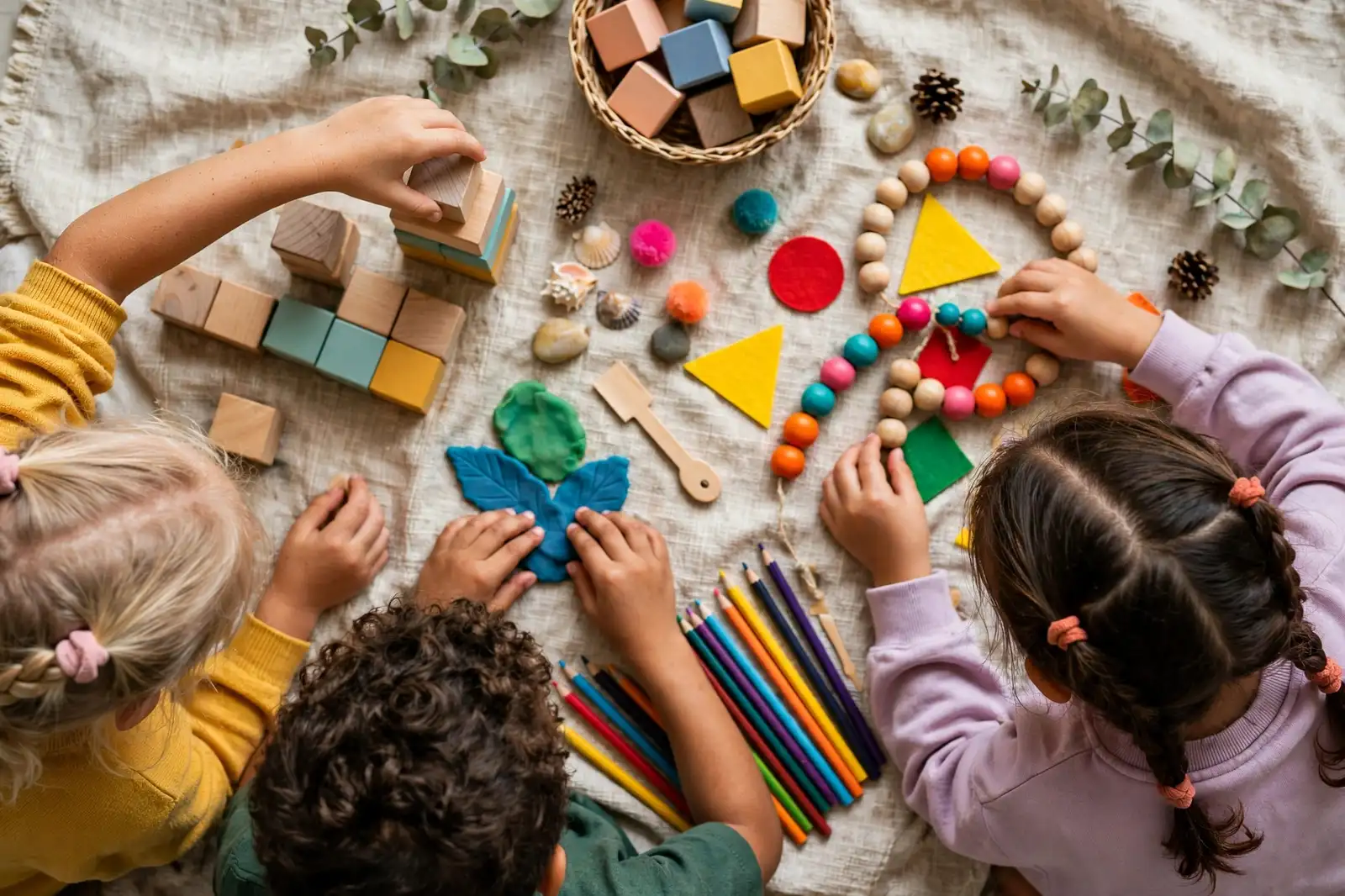
Screen-Free Kids: Learning and Fun Through Activities
Published on 8 min readParents & FamilyCompare AI models
Your kids can absolutely learn and have fun without screens. It's about shifting focus to activities that offer rich, tangible experiences, like outdoor play or reading together. The real trick is finding what genuinely engages your child, not just filling time. I've found it works best when you pick one or two activities you both enjoy and build from there, spending at least 20 focused minutes together a few times a week.
Why should you limit screen time for kids?
Excessive screen time can lead to attention issues, sleep problems, and less social interaction. Offering healthy, engaging alternatives isn't just about reducing screen use; it's about actively supporting your child's physical and mental development. In my house, we noticed a real difference in focus and mood when we started being more intentional about our screen-free hours. My son's bedtime resistance dropped noticeably after we swapped a cartoon before bed for a 15-minute quiet puzzle session. The blue light from screens suppresses melatonin, so cutting it out in the hour before sleep is one of the most concrete changes you can make.
What screen-free activities stimulate learning and creativity?
The best activities are simple, open-ended, and match your child's interests. They should allow for exploration without a rigid right or wrong outcome. Here are a few that consistently work well:
- Outdoor Play: A trip to the park or even just the backyard stimulates discovery and physical exercise. The key is unstructured time—let them lead the play. You might set a simple goal, like finding five different types of leaves, then step back. This develops observation skills far better than a directed nature lesson.
- Reading Together: Reading aloud builds vocabulary and imagination. Don't just read the words; ask questions about the pictures or what might happen next. This turns a passive activity into an interactive one. For a three-year-old, that might mean asking "What color is the dog's collar?" For a six-year-old, you could ask, "Why do you think the character felt sad?"
- Crafts: Using basic supplies sparks creativity and develops fine motor skills. A common mistake is presenting a complex project; start with something simple. I keep a dedicated craft drawer with plain paper, safe scissors, washable glue, and a bin of clean recyclables like cardboard tubes and egg cartons. Open-ended access to paper, for instance, can lead to folding, tearing, drawing, or attempted writing, which is more valuable than following a specific craft kit tutorial.
- Music and Movement: Singing, dancing, or making simple instruments encourages coordination and emotional expression. You don't need formal lessons—just put on some music and move. Making a shaker from an empty plastic bottle and some dried beans teaches basic rhythm and cause-and-effect in about five minutes.
- Board Games: Games teach problem-solving and turn-taking. Choose cooperative games for younger kids to avoid frustration. A game like "Hoot Owl Hoot!" where players work together to get the owls home before sunrise teaches strategy without creating a winner and loser.
What are common mistakes when choosing screen-free activities?
Parents often overcomplicate this. The main errors I see are picking activities that are too complex for a child's age and not considering what the child actually likes. Forcing a craft-loving kid into vigorous sports won't end well. Another mistake is not setting any structure—having a dedicated "activity basket" and a rough time of day for screen-free play makes the transition easier for everyone. I once planned an elaborate cardboard castle build for my four-year-old; he lost interest in ten minutes and just wanted to roll on the big cardboard sheet. The error was my vision, not his interest. Simpler is almost always better.
How can you encourage kids to explore hobbies without screens?
Your involvement is the most critical factor. Be a role model by picking up a book or working on a puzzle yourself. Offer support by sitting with them during an activity, even if it's just for ten minutes. Create an inviting environment: a low shelf with accessible books and toys, or a "craft corner" with basic supplies. This makes the screen-free choice the easy choice. I call it "setting the stage." If the art supplies are buried in a closet and the tablet is on the coffee table, the choice is already made. A visible, inviting alternative is half the battle.
How do you create a favorable environment for screen-free kids?
Your home setup can either encourage or discourage play. Start by organizing the physical space. Use open bins on low shelves for toys and books so kids can see and reach their options. A dedicated table for puzzles and crafts invites engagement. The goal is to make independent play possible. If a child has to ask for help to get every single thing they need, they'll get frustrated and give up.
How should you organize the environment?
Keep it simple. Use labeled bins or shelves for different types of toys—one for blocks, one for art supplies. This helps kids find what they want and, just as importantly, learn to put things away. A clutter-free space is more inviting for play. I use picture labels for my pre-reader: a photo of the blocks taped to the front of that bin. We spend five minutes before lunch doing a "clean-up sprint," which makes the space ready for the next activity. Too many toys out at once is overwhelming; it’s a common error that leads to kids flitting between items without deep engagement.
What kind of options should you provide?
Offer a mix of activities. Have puzzles, building blocks, dress-up clothes, and simple art materials available. You don't need a huge quantity; rotating a few items every couple of weeks keeps things feeling fresh and interesting. I keep a storage box in the closet with "resting" toys. When the wooden train set comes out after a two-week break, it’s like Christmas morning. This rotation system prevents boredom without requiring new purchases.
How do you set clear rules?
Be specific and consistent. You might say, "Screens are off after dinner" or "We have quiet reading time every afternoon for 20 minutes." Keep devices out of bedrooms and common play areas. When kids know what to expect, they're less likely to argue. In our home, tablets live in a charging dock in the kitchen, not in living areas. The rule is physical and visible. Ambiguous rules like "not too much screen time" are impossible for a child to follow and create daily negotiations. To go deeper on this point, see The Real Dangers of Screen Time for Kids in Brazil and What to Do.
Why is being a healthy model important?
Kids copy what they see. If you're constantly on your phone, they'll want to be on a tablet. Make a point to have screen-free times yourself. Show genuine interest in their board game or drawing. Your participation is the best encouragement they can get. I put my phone in another room during our after-dinner play hour. It’s a small habit, but it signals that this time is for us. They notice.
How do you make screen-free activities attractive to kids?
The biggest worry is that kids will find alternatives boring. To make activities appealing, start by knowing your child's interests. A kid who loves dinosaurs will be more engaged by dinosaur figurines and related books than generic crafts. Get them involved in choosing. Ask, "Should we build a fort or do some painting today?" Giving them a say between two good options increases buy-in. Keep it fun and playful—turn cleanup into a "who can find all the blue blocks" game, or have a silly 30-second dance break during longer activities. Vary the routine to prevent boredom. Maybe Monday is for building, Tuesday is for baking something simple like no-bake energy balls, and Wednesday is for a nature walk. My own rule is to always be present at the start of an activity. Your involvement for the first five minutes—sitting down to build the first few Lego layers or reading the first book page—can be the spark that gets them engaged for the next half hour on their own.
What does a sample screen-free day look like?
It's helpful to see how these ideas fit into a real day, not as a perfect schedule but as a flexible rhythm. Here’s a rough outline for a preschool-aged child:
- Morning (after breakfast): 45 minutes of independent play with options from the rotated shelves (e.g., blocks, dolls, cars).
- Late Morning: Outdoor time or a focused activity like play-dough or water painting on the patio for 30 minutes.
- After Lunch: Quiet time. This could be looking at books in their room, listening to an audiobook, or rest.
- Afternoon: A planned activity together, like a simple craft or baking, for about 30 minutes, followed by more free play.
- After Dinner: Family time—a board game, reading together, or a walk around the block.
The key isn't the specific blocks of time, but the intentional alternation between child-led free play and brief periods of focused, connected activity with you. The goal is to avoid the vacuum of unstructured time that naturally gets filled with a screen.
*This information is for educational purposes and is not a substitute for professional advice from a healthcare or educational expert.*
See also
Frequently asked questions
How much time should children spend in front of screens per day?
The American Academy of Pediatrics recommends no more than one hour per day for children.
What are the benefits of screen-free children's activities?
Screen-free children's activities can stimulate learning, creativity, social interaction, physical exercise, and emotional development.