
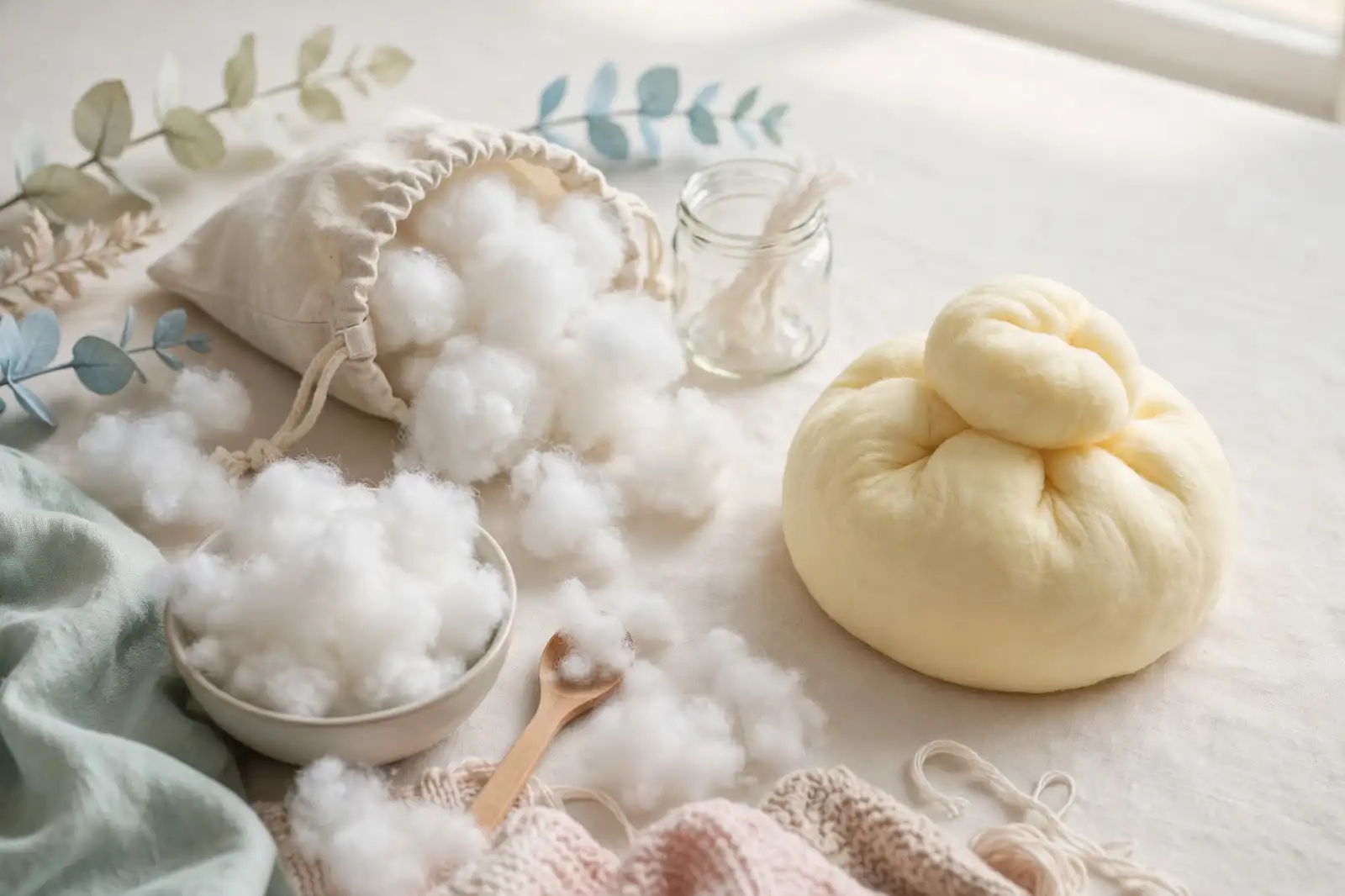
What filling should I use for my homemade squishy to keep it soft and
Published on 6 min readSquishiesCompare AI models
The best filling for a soft, durable homemade squishy is medium-density polyurethane foam. It gives the classic slow-rising texture most like a store-bought squishy. Your other main options are silicone fiber for a firmer feel, hair gel in a bag for a slime-like texture, or polystyrene pellets for a sand-like sound. Just know none of them last forever—foam dries, fiber clumps, gel can leak, and pellets flatten—so the choice depends on the texture you want and how long you need it to last.
How does polyurethane foam behave in a squishy?
Polyurethane foam is the slow-recovery material used in mattresses. When you squeeze a squishy made with it, the foam compresses and then slowly expands back to shape. This slow rising is what defines a classic squishy. The ideal foam density for this is between 20 and 25 kg/m³. Lower density foam flattens too fast, and higher density foam feels too hard to squeeze properly.

I find scraps at upholstery shops or buy a cheap camping mattress topper. You cut the foam with a serrated bread knife or heavy fabric scissors. Cut your piece about 1 cm larger than your fabric template because the foam will compress once inside the cover.
The biggest mistake I see is using the crumbly gray foam from electronics packaging. It turns to dust after a few squeezes. You must use new, yellow or white upholstery foam.
Is silicone fiber a good cheap option?
Silicone fiber is the treated polyester filling from cheap pillows. It's a low-cost choice, around $5 to $10 for a kilogram bag. The downside is that it doesn’t recover its shape well. After you squeeze it, the squishy stays compressed longer, and over time the fibers mat together and the piece loses its volume. It works okay for small, firm squishies, but it’s not my favorite for the classic soft feel.
To use it, pull the fiber apart into small tufts and stuff them into the cover one by one. Use a chopstick or skewer to push filling into the corners. Don’t overfill it—the squishy needs empty space inside to compress.
Can I use hair gel for a slime texture?
Putting hair gel or cheap conditioner inside a small, sealed ziplock bag mimics a slime squishy. When you squeeze it, the gel flows slowly, creating a liquid, soft texture. It’s the easiest filling to prepare—just seal the gel in the bag and put the bag inside your fabric or balloon cover.
The major risk is leaks. If the bag punctures, the gel ruins the cover. I use name-brand freezer bags and always do a pressure test by squeezing the sealed bag hard before putting it in the squishy. Also, the gel can warm up from your hands and become runnier.
This technique works perfectly for balloon squishies, which you can learn more about in our Complete checklist for making a squishy with balloons.
What about polystyrene pellets?
Polystyrene pellets are the tiny foam beads used in bean bags. They create a distinctive sand-like crunching sound when squeezed. The texture is much firmer than foam; the squishy doesn’t compress much, it just gives a little. The beads are lightweight and inexpensive (about $8 per kg), but you usually have to buy them online.

The problem is durability. The beads crush and flatten with use, so after a few weeks of heavy squeezing, the squishy goes flat. To fill, I make a funnel from a cut plastic bottle, pour the beads in slowly, and tap the cover on the table to settle them. It needs to be full but not packed tight.
How do the fillings compare?
| Filling | Softness | Durability | Cost | Slow Rising Effect |
|---|---|---|---|---|
| Polyurethane Foam (20–25 kg/m³) | High | Medium (dries in 6–12 months) | Medium ($5–10/kg) | Yes |
| Silicone Fiber | Medium | Low (clumps in 3–6 months) | Low ($3–8/kg) | No |
| Hair Gel in Ziplock | High | Low (leaks if punctured) | Low ($2–5 total) | No (flows) |
| Polystyrene Pellets | Low | Medium (flatten in 2–4 months) | Low ($8/kg) | No (sand sound) |
What are common filling mistakes?
Overfilling is mistake number one. A squishy isn't a pillow; it needs air pockets inside to compress. If the cover is stretched taut, it won't be soft. A good test is to squeeze it before you sew it closed—it should give at least a centimeter.
Using old, low-quality materials to save money is another. Foam from an old mattress or filling from a used pillow can have dust mites or mold. Always buy new, sealed material.
Not testing the filling first is a sure way to waste a good cover. Make a small test pouch with scrap fabric and your chosen filling, squeeze it a bunch of times, and see if you like the feel before committing.
How can I test a filling before making the final squishy?
- Cut a 10 cm square from an old sock or thin fabric.
- Put your chosen filling inside the square.
- Close it with a rubber band or tape to make a test ball.
- Squeeze the ball 20 times in a row, like a child would.
- Observe: Does it return to shape? Make noise? Leak?
- If you're happy, use that filling. If not, try a different material.
This simple test saves you from ruining a nice cover. It's the same method I detail in my guide, Squishy Made at Home, where I match fillings to different cover types.
When should I choose each filling?
Choose polyurethane foam for professional-looking squishies, especially if you plan to give them as gifts. It's the closest to the commercial product.
Use silicone fiber for personal-use squishies for young kids who squeeze constantly. The low cost means you can easily remake it when it clumps.
Hair gel in a bag is best for themed balloon squishies, like slime or fake food, for older children who can be gentle.
Pick polystyrene pellets for sensory squishies where the crunchy sound is the main feature, but not if you want a soft, slow-rising texture.
Honestly, no homemade filling lasts more than a year with daily use. They all degrade—foam dries, fiber clumps, gel may leak, pellets flatten. Part of the DIY fun is making a new one when the old one loses its charm. If you're curious about other methods, you can also explore How to make a paper squishy at home, which uses common household materials.
Frequently asked questions
Can I use sand or rice as squishy filling?
Sand and rice are too heavy and hard for a squishy. They don't compress like foam or fiber, and the weight makes the cover stretch and tear. Plus, they can get moldy inside the fabric. Stick with the recommended materials in the article.
Where can I buy polyurethane foam for squishy in a physical store?
You can find it at upholstery shops, mattress stores, and even some large fabric stores. Ask for foam scraps with a density of 20 or 25—they sell it by weight or by piece. Avoid foam from old mattresses or packaging.
How long does it take to make a squishy with foam?
Cutting the foam, sewing the cover, and filling it takes 30 to 60 minutes for a beginner. The most time-consuming part is hand-sewing. If you use a balloon instead of fabric, the process drops to 15 minutes.
What should I do if my foam squishy turned out too hard?
The foam might have too high a density (above 30 kg/m³) or you overfilled the cover. Try switching to softer foam or remove some of the filling. If the cover is fabric, give it a few firm squeezes to loosen up the foam.