
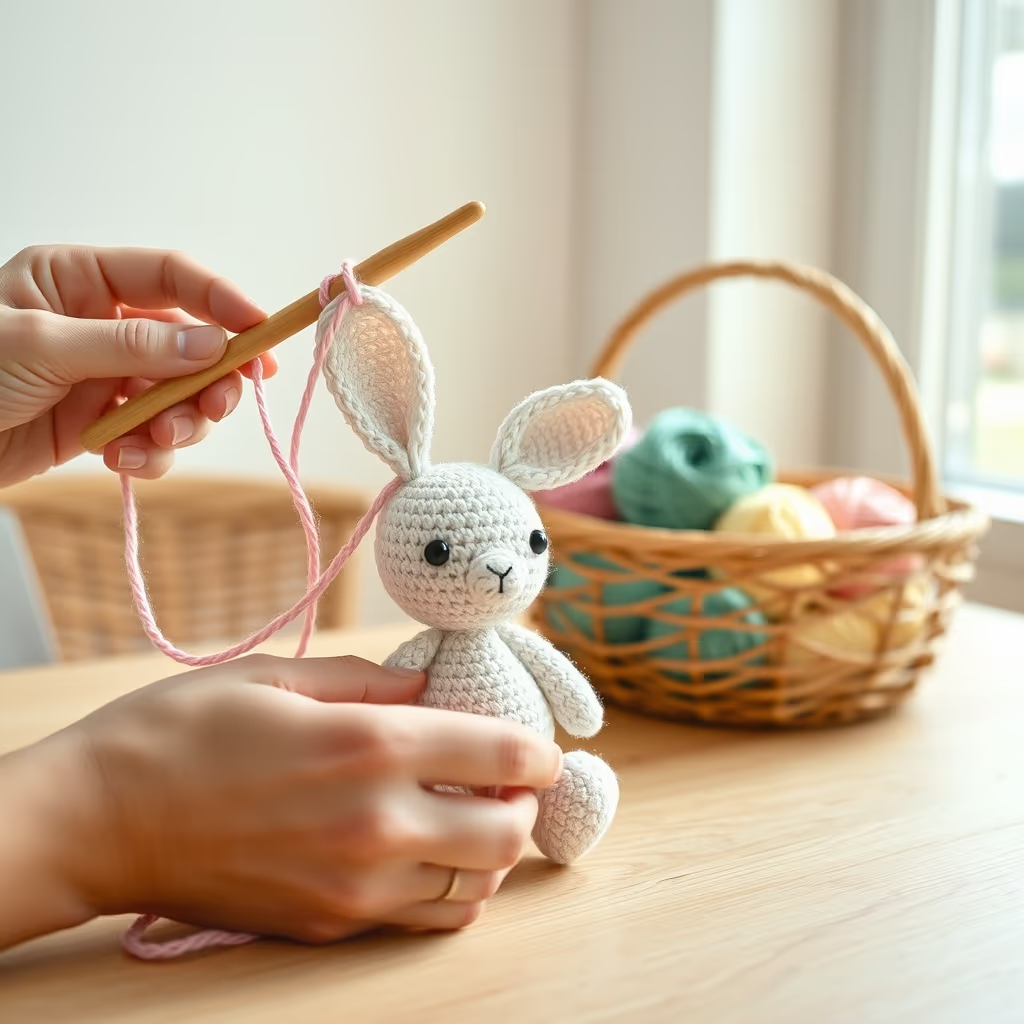
A Practical Guide to Crochet
Published on 4 min readSquishiesCompare AI models
# The Fascination of Crochet: More Than Just a Hobby, an Expression
Crochet is a centuries-old technique that has spanned generations, yet it has never lost its relevance. Far from being just an activity to pass the time, crochet has become a powerful tool for creative expression and a practice recognized for its benefits to mental well-being. In the world of *Do It Yourself* (DIY), crochet stands out for its versatility: you can create everything from complex garments to adorable amigurumi (crochet dolls) that are so charming.
The act of repeating rhythmic movements with the hook and yarn allows many people to achieve a state of concentration similar to meditation, helping to reduce everyday stress. Furthermore, the satisfaction of transforming a simple ball of yarn into a useful or decorative object is unparalleled.
Essential Materials for Beginners
For those just starting out, the temptation to buy the entire catalog of a craft store is strong. However, to avoid unnecessary expenses, it’s important to focus on what truly matters for your first projects. Here’s an honest list of what you need:
1. Crochet Hooks
Hooks vary in size, material, and ergonomics. We recommend the following for beginners:
* Material: Metal hooks (aluminum) are the most common and slide easily through the yarn. Bamboo or wooden hooks are excellent for those with very tight tension, as they offer more control and less slippage. * Size: Start with hooks between 3.5mm and 5.0mm. They are easier to hold and allow you to visualize your stitches more clearly.
2. Yarn and Wool
The choice of yarn determines the final result and the ease of learning.
* Cotton: This is the favorite material for making amigurumi or decorative items, as it has less elasticity and holds its shape well. * Acrylic: It’s an economical and very soft option, ideal for blankets, scarves, and winter garments. * Golden Tip: Avoid very dark or very fluffy yarns when starting. Light-colored yarns with a smooth texture make it easier to see where to insert the hook.
3. Supporting Accessories
Although they seem secondary, these items make life much easier: To go deeper on this point, see How to Make a Paper Squishy at Home.
* Stitch Markers: Essential for knowing where a row begins and ends, especially in circular works. * Precision Scissors: For clean cuts in the yarn. * Tapestry Needle: A blunt-tipped needle used to hide yarn ends when finishing a piece.
The First Stitches: The Foundation of Everything
Before attempting to reproduce a complex pattern, you need to master the basic mechanics. Every crochet project starts with a solid foundation. The four initial stitches are:
- Slip Knot: This is the starting point for placing the yarn on the hook.
- Chain Stitch (ch): The base for almost all flat work. It’s a sequence of loops that form a “chain” of yarn.
- Single Crochet (sc): A short, firm stitch, often used to add density to pieces like amigurumi.
- Double Crochet (dc): A longer, more open stitch that makes the piece grow much faster and results in a more pliable fabric.
"Practice in crochet is not about how quickly you finish a piece, but about the consistency of your tension and the understanding of the stitch structure."
Creating Amigurumi: The Fuzzy Side of DIY
If you enjoy the *Squishies* category, crochet offers an incredible artisanal alternative: Amigurumi. This Japanese technique involves creating small three-dimensional objects, usually animals or characters, using single crochet stitches and synthetic filling.
Unlike garments, amigurumi requires strict control of tension to prevent the filling from showing through the stitches. It’s a project that exercises patience and precision, but the result is a unique, handmade piece with a sentimental value much greater than any mass-produced toy.
Tips for Evolving Without Frustration
The path of learning can have ups and downs. It’s common for the first piece not to be perfect or for the tension of the stitches to vary greatly. To maintain enthusiasm, follow these recommendations:
* Don’t rush: Start with small, simple projects, such as a cup coaster or a basic scarf. * Count your stitches: One of the most common errors is losing stitches on the sides, which causes the piece to twist. Use stitch markers to ensure you’re maintaining the correct count. * Analyze your tension: If your work is becoming too tight and the hook doesn’t easily enter, relax your hands. If it’s too loose, try holding the yarn with a little more firmness. * Use online resources: There are thousands of free tutorials that visually demonstrate how each movement should be done. Seeing the movement in video is much more helpful than just reading a written pattern.
Crochet is a journey of constant discovery. Each new stitch learned is a new possibility for creation. Grab your hook, choose a color you love, and start building your own universe of yarn today.
Frequently asked questions
What materials do I need to start crocheting?
You'll need a crochet hook, yarn, and a few supporting accessories. For beginners, it's best to start with a metal hook between 3.5mm and 5.0mm and light-colored, smooth yarn like cotton or acrylic. Essential accessories include stitch markers, precision scissors, and a tapestry needle.
What are the basic crochet stitches for beginners?
The foundational stitches are the slip knot, chain stitch, single crochet, and double crochet. Mastering these allows you to start most projects, as they form the base for creating fabric and understanding stitch structure.
How can I avoid frustration when learning to crochet?
Start with small, simple projects and don't rush. Use stitch markers to count your stitches and prevent your work from twisting, and pay attention to your tension to keep stitches consistent. Watching online video tutorials can also be very helpful.