
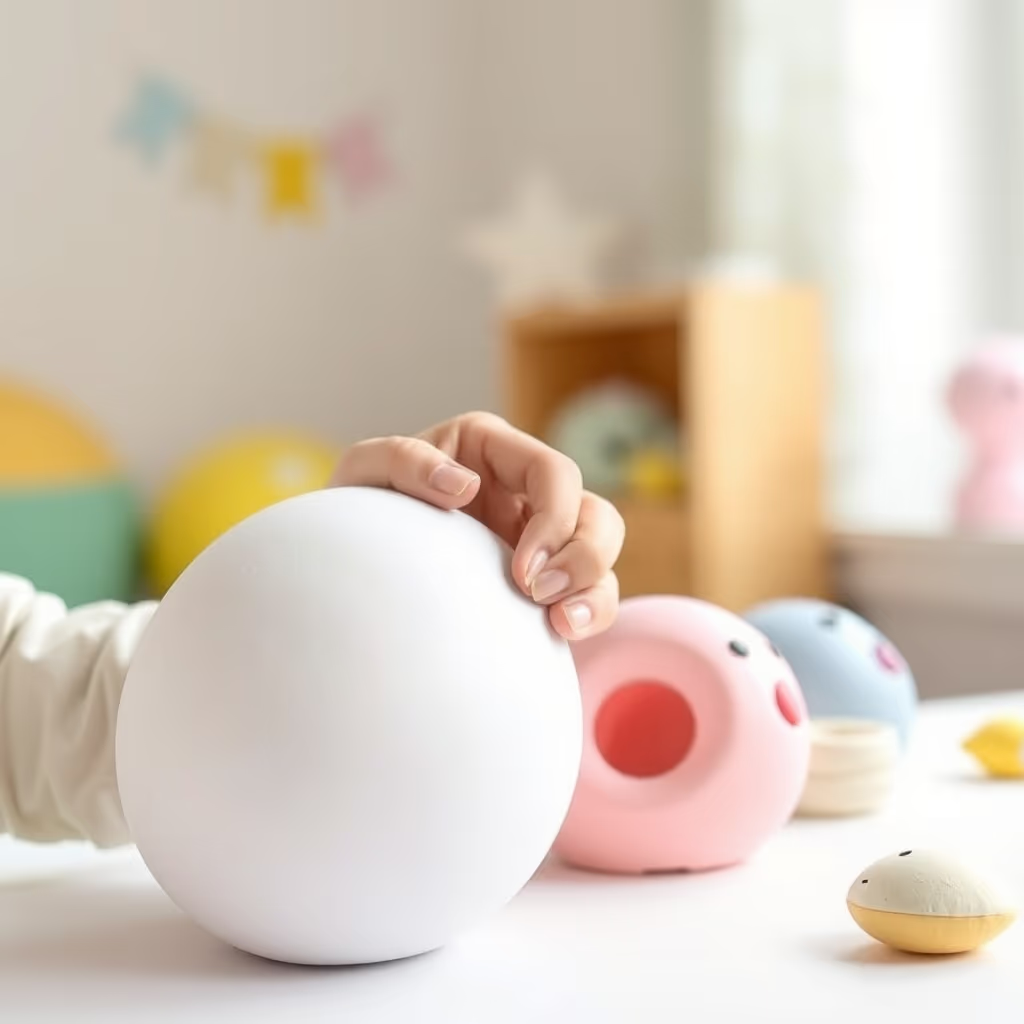
Squishies and kids: a guide to safety and non-toxic materials
Published on Updated on 4 min readSquishiesCompare AI models
Making squishies with a child is one of the best craft activities there is: cheap, creative and instantly rewarding. But it involves scissors, paint, glue and small parts — so safety isn't a detail, it's part of the recipe. This guide lays out what to use, what to avoid and what each age group can do on their own.
Important notice: homemade squishies are not certified toys. Nothing here replaces the safety standards for manufactured toys or the judgment of the person who knows the child. When in doubt, simplify the activity or postpone it.
The golden rule: mouths, eyes and small parts
The three real risks of a homemade squishy are: To go deeper on this point, see How to make a foam squishy at home: the basic step-by-step recipe.
- Mouthing: foam, paint and stuffing are not edible, and bitten-off pieces can cause choking. Homemade squishies are not for babies or for children who still explore everything with their mouths — as a rule, children under 3 stay out of the activity and away from finished pieces.
- Parts that come loose: glued-on eyes, buttons and decorations come off with use. For young children, choose painted details instead of glued ones.
- Cutting tools: a craft knife is an adult tool, always. Blunt-tip scissors handle almost everything in soft foam.
Non-toxic materials: what to look for on the label
When buying, look for the words "non-toxic" on the label and an indication of school/children's use:
- White school glue (PVA): school versions are formulated for use by children. Avoid instant glues (cyanoacrylate) and contact cement — besides being toxic to handle, they bond skin instantly.
- Non-toxic acrylic paint or poster paint: poster paint is the safest for little ones, though the colors are less saturated. Spray paint is off-limits for activities with children: the fumes require ventilation and a mask.
- Foam that is clean and new, or thoroughly sanitized: foam from an old pillow must be washed and completely dried before use.
- Non-toxic fabric markers: great for final details without a brush.
Keep out of reach: solvents, spray varnish, hot glue guns (burns are the most common accident in kids' crafts) and any unlabeled paint.
What each age can do
Every child is unique; the ranges below are starting points, not rigid rules.
Ages 3 to 5 — painting helpers
- They join in by squeezing sponges, choosing colors and painting large areas with a thick brush and poster paint.
- All cutting stays with the adult.
- Keep it short: 20 to 30 minutes is the realistic attention limit.
Ages 6 to 9 — beginner cutters
- They cut soft foam with blunt-tip scissors, with an adult close by.
- They can make the no-glue sponge squishy almost alone — it's the ideal project for this age range.
- Painting with the paint-and-glue mix, with the adult preparing the mix.
Ages 10 and up — full supervised project
- They carry out the basic foam recipe from start to finish, with the adult taking over only the tricky cuts.
- They learn to wait through the drying stages — an excellent exercise in patience, by the way.
Setting up a safe workspace
- Cover the table with newspaper or plastic; paint with glue bonds hard to wood.
- Old clothes or an apron — the mix doesn't come out of fabric easily once dry.
- Open a window: even non-toxic materials have a smell, and ventilation is always welcome.
- A cup of water for brushes kept far from the drinking cup. Sounds obvious, until a child mixes up the two.
- Wash hands at the end, always.
During play (once it's done)
- Inspect the squishy from time to time: tears expose the inner foam, which comes off in little pieces. Torn? Take the piece away and do the repair before handing it back.
- A squishy that's wet inside grows mold. If it ends up in water, see how to clean and dry it properly.
- Establish the "squishies don't go in mouths" rule from day one — including for store-bought ones.
Allergies and sensitivities
- Latex: balloon balls are off-limits for anyone with a latex allergy; use the foam or sock methods instead.
- Foam dust: sanding releases particles; children with asthma or rhinitis stay away from that step (or it's done with the foam slightly dampened, which sheds less dust).
- Any redness or itching while handling the materials: stop, wash with soap and water and switch materials.
---
Want a single reference to check before every project? The ebook Homemade Squishy, in production, will have the guide's most complete safety chapter, with printable checklists by age. Subscribe to the blog to follow along and get the launch announcement.
Frequently asked questions
What materials are safe for kids to use when making squishies?
Look for materials labeled as "non-toxic" and intended for school or children's use. This includes white school glue (PVA), non-toxic acrylic or poster paint, clean new foam, and non-toxic fabric markers. Avoid instant glues, contact cement, spray paint, hot glue guns, solvents, and any unlabeled paints.
At what age can a child help make a squishy?
Children aged 3 to 5 can help by painting large areas with thick brushes and poster paint, but all cutting is done by an adult. Children aged 6 to 9 can cut soft foam with blunt-tip scissors under supervision and can manage a no-glue sponge squishy project almost alone. From age 10, they can handle a full project with supervision for tricky cuts.
What are the main safety risks with homemade squishies?
The main risks are mouthing, as foam, paint, and stuffing are not edible and can cause choking; small parts like glued-on decorations coming loose; and improper use of cutting tools. Homemade squishies are not for children under 3 or those who still explore with their mouths.