
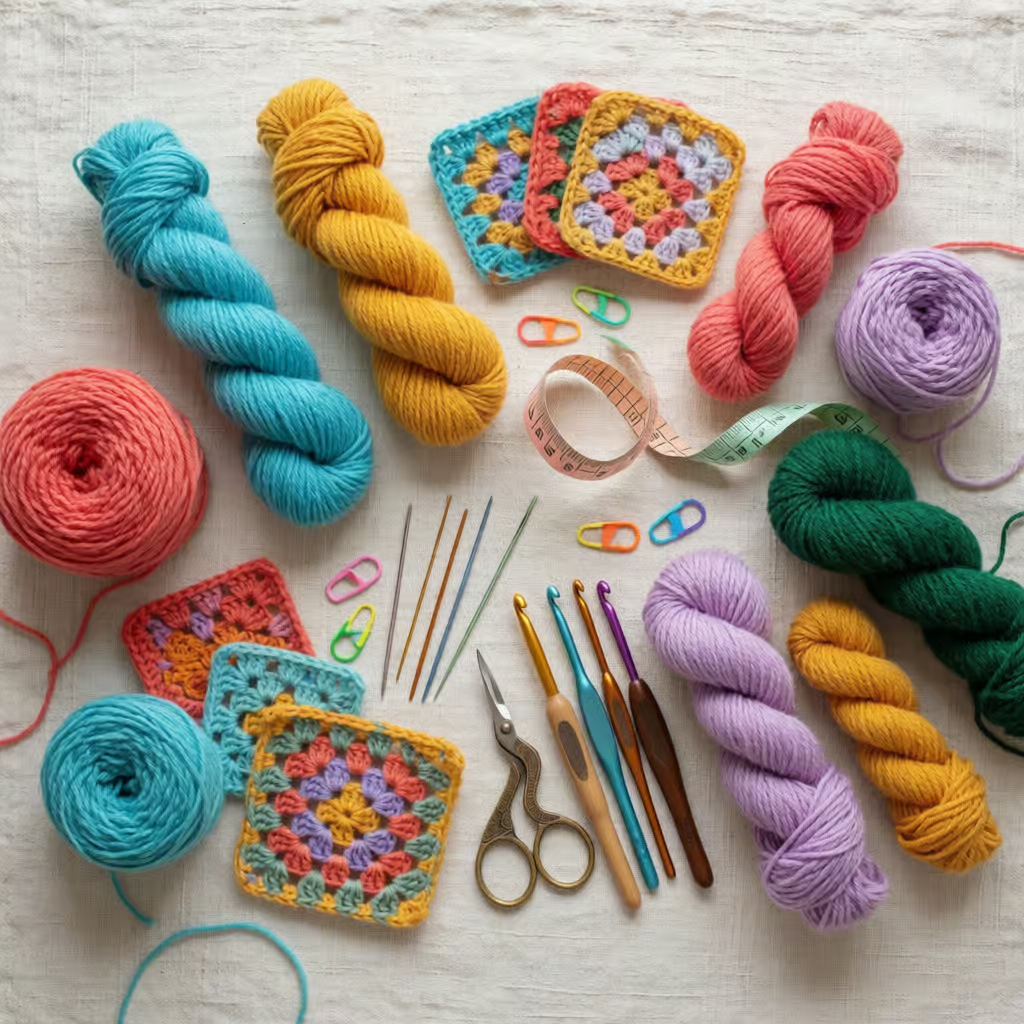
Unmasking Crochet Myths for Beginners
Published on 8 min readCrochetCompare AI models
You only need to master two stitches to create beautiful crochet pieces: single crochet and double crochet. With them, you can make scarves, hats, and other simple pieces that are warm and have a great finish. The myth that special talent or years of practice are needed is debunked when you finish your first easy project, which uses repetitive patterns and helps you build confidence.
How to Identify the Myth That Advanced Skills Are Needed for Beautiful Pieces?
The myth is the idea that only decorative or complex stitches, like florid or spiral patterns, result in beautiful work. This belief makes many beginners lose heart before even picking up a hook. You can test and debunk this idea by making a scarf using only single crochet. The texture is dense and uniform, and the beauty comes from the yarn color and the regularity of your work. A common mistake is picking up a specialized magazine and comparing yourself to intricate projects, which are made for those with experience. These publications aren't the ideal starting point. The best path is to start with the simple and evolve at your own pace. Making small swatches that can later become a simple pen holder is an excellent way to practice without the pressure of a large project. Repetition builds skill, not initial complexity.

How to Master the Two Basic Stitches of Crochet to Create Beautiful Pieces?
The two fundamental stitches are single crochet and double crochet. Single crochet is the simplest, forming a denser texture—perfect for pieces that need more structure. Double crochet is a bit more elaborate, creating a looser weave that works up quickly, but it's still easy to learn. To master them, start with thicker yarns, like medium-weight wool, and larger hooks, like size 8 or 9. This makes the stitches more visible and easier to handle. Set aside 15 minutes daily to practice; in a week, you'll notice a difference in hand control. Video tutorials are incredible tools for visualizing the correct movement of the hook and yarn. I learned by pausing the video at the same second until the movement made sense. Repeat the stitches until you're comfortable, making swatches that can be discarded or reused. Don't get frustrated if the first yarns are too loose or too tight—that's part of the process. If you get stuck on a specific step, ask for help in crochet groups on social media or from someone who already crochets. Another valuable tip is to experiment with different yarn types. Wool is softer and forgives mistakes, while mercerized cotton has a firmer texture and slides well. Testing the stitches on different materials helps you understand how each behaves.

How to Choose Simple Crochet Projects for Beginners?
Simple beginner projects use only basic stitches and have few assembly steps. The golden rule is to choose something that finishes quickly, as the sense of completion keeps motivation high. Scarves are the classic choice—they're long, but they tolerate small imperfections, since tension variations blend in over the piece. Basic hats are a step up, requiring a bit more attention to close increases and maintain the correct size. Small items like a pen holder are ideal because you can finish them in an afternoon. I made one in single crochet with blue yarn and used it for years. Always prefer repetitive patterns, which are easier to memorize—you fall into a rhythm, and the work flows. To find ideas, look for books or blogs aimed at beginners. Some craft apps also organize projects by difficulty. Avoid any project that mentions stitches like "fantasy stitch," "shell stitch," or "popcorn stitch" at the start. And choose something useful: a scarf for cold weather, a hat for windy days, or a hot pan holder. Gifting something you made gives a sense of accomplishment no store-bought item can match.

How to Debunk the Myth That Expensive Materials Are Needed for Beautiful Pieces?
The idea that you need imported yarns or specific brand hooks to make something beautiful is completely false. Enchanting pieces come from practice and consistency, not the price tag. To test this, use affordable materials: a soft-texture acrylic yarn and a medium-sized aluminum hook, which you can find in any craft store or even big-box magazines. With this basic set, you can easily make hats, small baby blankets, or simple bags. The visual quality of your work depends much more on how you execute the stitches—whether they're uniform and well-closed—than on the material's origin. A common beginner mistake is thinking that buying more expensive yarn automatically results in a better outcome. Don't fall for that pressure. Focus on mastering the technique with what you already have or what fits your budget. Only when you're more comfortable and want to experiment with different textures or effects should you explore other yarn types. The initial focus should be on learning the movement, not building an expensive supply collection.
How to Debunk the Myth That Perfect Tension Is Needed from the Start for Beautiful Pieces?
Thinking that yarn tension—the tightness or looseness with which you pull each stitch—needs to be flawless from the first row is a paralyzing thought. The truth is that uniform tension is a skill developed through practice, not a requirement to start. It naturally varies based on your fatigue, focus level that day, and even how you hold the hook. This isn't a flaw; it's the mark of a handcrafted, human-made piece. To handle this without stress, get in the habit of checking your work every few rows. If you notice stitches are too tight, intentionally loosen your grip on the yarn. If they're too loose, pull a bit more firmly. Taking regular breaks to stretch your fingers and wrists is important, as muscle fatigue alters tension without you realizing it. Choosing a hook with a comfortable handle for your grip also helps. Small irregularities—like a row that's a little straighter—don't ruin the piece. Often, they add unique charm and show it was made with care. Remember: crochet is a hobby for relaxation and creation, not an industrial production line requiring strict standards.
What Are the Most Common Mistakes for Beginners and How to Fix Them?
Beyond the search for perfect tension, several practical mistakes hinder many beginners. One is not counting stitches at the start of each row. You begin a row, make a few stitches, and when you turn the work, you realize you have too few or too many, leaving the sides lopsided. The fix is simple: use a stitch marker, which can be a safety pin or a piece of contrasting yarn, to mark the first and last stitch of each row. Another mistake is choosing a very thin or dark yarn for your first attempts. Small, dark stitches are hard to see, making it tricky to learn where to insert the hook. Always start with thick or medium-weight yarns in light or bright colors. A third error is skipping the swatch step. People want to jump straight to a scarf, but making a 10x10 cm square with your chosen stitch helps you adjust tension, understand yarn coverage, and get familiar with the pattern before committing to a full project. Fixing these slip-ups from the start saves frustration and wasted material.
What's the Next Step After Mastering the Basic Stitches?
Once you feel confident making straight rows of single and double crochet, the next natural step is to learn to increase and decrease stitches. These techniques let you shape pieces, turning a rectangle into a hat or a circle into a bag base. Increases are made by working two stitches into the same previous stitch, and decreases combine two stitches into one. Practice these maneuvers on a new swatch, creating a small disc or triangle. Another advance is experimenting with stitches that are simple variations of the basics, like half double crochet, which has an intermediate height and creates an interesting texture. From there, you can follow written patterns for slightly more elaborate projects, like a striped blanket or a bag with handles. The key is to keep choosing projects with only one or two new elements at a time to avoid feeling overwhelmed. Crochet is a layered journey, where each new skill builds on what you've already mastered. The next step is to pick up a yarn and hook and test an increase in a swatch. To go deeper on this point, see What AirFryer dinners combine flavor and simplicity for beginners?.
Frequently Asked Questions
Can I use sewing thread to learn crochet? I don't recommend it. Sewing thread is very thin and rigid, making stitches almost invisible and hard for beginners to handle. This increases frustration. To learn, use medium or thick yarn, like wool or acrylic, which are more flexible and let you clearly see where to insert the hook.
How do I clean my first crochet pieces? Most common acrylic and wool yarns can be hand-washed in cold water with mild soap. Avoid rubbing the piece; just gently squeeze out excess water and rinse. To dry, lay the piece flat on a towel, shaping it as desired. Never twist or hang a wet piece, as this can permanently deform it. Always check the yarn label for specific instructions.
Read also
- How to create effective rules to limit kids' screen time
- How to create effective rules to limit kids' screen time
- How to create effective rules to limit kids' screen time
- What AirFryer dinners combine flavor and simplicity for beginners?
Frequently asked questions
Do I need to know a lot of stitches to make nice crocheted things?
No. You only need to master two basic stitches: the single crochet and the double crochet. With these, you can create beautiful, warm pieces like scarves and hats using repetitive patterns that help build confidence.
Do I need to buy expensive materials to start crocheting?
No, that idea is misleading. Beautiful pieces come from practice, not the cost of the material. You can start with an affordable acrylic yarn and a medium-sized aluminum hook, focusing on mastering the technique to get uniform stitches.
Do my stitches need to be perfect from the start?
No. Even tension is a skill that develops with practice. Small irregularities are normal and don't ruin the piece; they can even give the handiwork a unique charm. The important thing is to relax and create.