
Slow-rising squishies: why they rise slowly
Published on Updated on 4 min readSquishiesCompare AI models
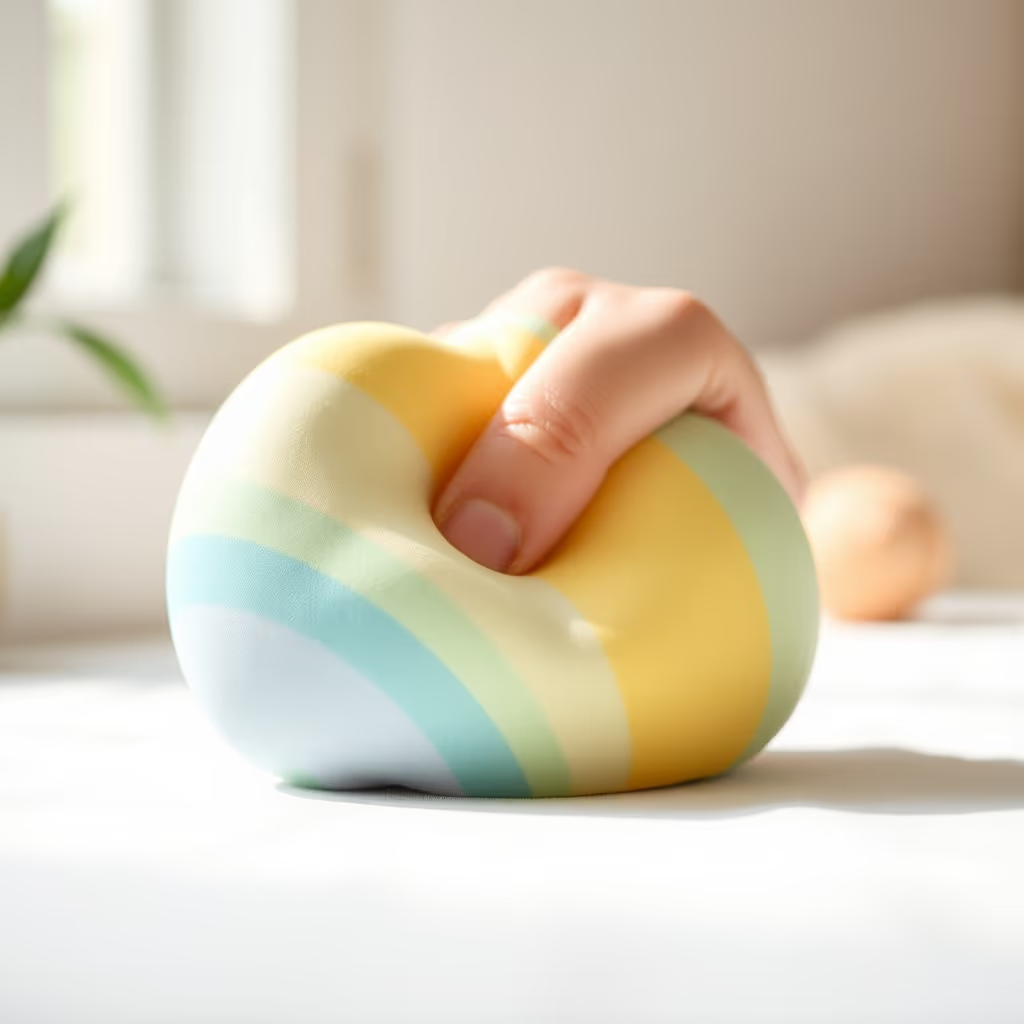
Squeeze one of those good store-bought squishies and it sinks all the way in, hesitates a moment and slowly returns to shape, like bread dough rising in fast-forward. That effect has a name — slow rising — and it's what separates a mesmerizing squishy from an ordinary sponge. In this article we explain the simple science behind the effect and, honestly, what you can and can't reproduce at home.
The science of the slow rise
The material in commercial squishies is open-cell polyurethane foam, a relative of "viscoelastic" mattress foams (memory foam). Three characteristics create the effect:
- Open, interconnected cells: the foam is a network of millions of connected air-filled bubbles. When you squeeze, the air doesn't get trapped — it escapes slowly from cell to cell until it's out.
- Slow elastic recovery of the polymer: the polyurethane in these formulas is tuned to return slowly to its original shape instead of snapping back like rubber.
- Air re-entry: for the piece to regain its volume, air has to travel back through the cell network. That slow flow is what you see as the gradual rise.
In short: slow rising = open cells + a lazy polymer + air coming back bit by bit. The finer the internal "maze", the slower the rise.
Why your household sponge doesn't do this
Household foams — bath sponges, ordinary pillow foam — also have open cells, but the polymer is springy and the air passages are wide. Result: air moves in and out fast, and the piece bounces back almost instantly. That's why the basic foam recipe produces squishies that are satisfying to squeeze but quick to recover.
What you can do at home (and actually test)
Without industrial chemistry, you can't make slow-rising polyurethane in your kitchen sink. But you can slow down a homemade squishy's recovery with three tricks:
1. Choose memory foam
Memory foam pillows and mattresses (the "NASA foam", as retailers love to say) use exactly the right family of foam. A retired memory foam pillow yields dozens of squishies with a genuinely slow rise. Test before cutting: press with your thumb; if the fingerprint fades slowly, it's the right material.
2. Partially seal the surface
Painting with the paint-and-glue mix (the same one from our painting guide) forms a skin that makes it harder for air to get out and back in. A piece well painted on every face returns visibly more slowly than raw foam. Two or three thin coats increase the effect; just don't overdo it to the point of stiffening.
3. Bulk up the core
Bigger, "chubbier" pieces recover more slowly than thin ones, because the air has more maze to travel. If you want a slow rise, forget flat shapes and go for a round bread roll, a tall cube or a ball — the more voluminous of the beginner shapes are the best candidates.
Honest expectation: with these three tricks, a homemade squishy goes from instant recovery to a rise of 2 to 4 seconds. The 8 to 10 seconds of a top-tier commercial squishy remain out of reach at home — and that's okay.
Why slow rising "dies" over time
Store-bought squishies lose their slowness over the years, and homemade ones change too:
- Polymer fatigue: thousands of squeezes stretch the cell walls, which start letting air back through faster.
- Invisible internal tears: micro-ruptures create shortcuts for the air. A piece that suddenly turned "fast" on one side probably has internal damage — worth checking the repair guide.
- Drying out: heat and sunlight degrade polyurethane. Storing pieces away from windows preserves the effect, as we explain in how to organize your collection.
The rise test: measure yours
Want to track how your pieces evolve? Do the standard test:
- Press the piece fully flat against the table for 3 seconds.
- Release and time how long it takes to recover its full shape.
- Note the date and time taken. Repeat every so often.
It's a game, but also a concrete way to compare foams, paint jobs and shapes across your projects — and to notice when a piece needs some care.
---
Curious to go deeper into the materials? The ebook Homemade Squishy, in production, will have a chapter comparing the most common household foams and their recovery times. Subscribe to the blog to follow the development and find out when the guide is ready.
Frequently asked questions
Why do some squishies rise back up slowly?
The slow rise happens because the foam has open, interconnected cells that let air escape and return gradually, combined with a polymer that recovers its shape lazily instead of snapping back. The air must slowly travel back through the internal maze of cells, which creates the visible, gradual recovery.
How can I make a homemade squishy rise slower?
You can slow down a homemade squishy's recovery by using memory foam from a pillow or mattress, which has the right polymer. Painting the surface with a paint-and-glue mix creates a skin that restricts air flow, and making thicker, bulkier shapes gives the air more maze to travel through, further slowing the rise.
Why did my squishy stop rising slowly?
The slow rise can fade due to polymer fatigue from repeated squeezing, which stretches the cell walls. Invisible internal tears create air shortcuts, and exposure to heat or sunlight can dry out and degrade the polyurethane, all leading to a faster recovery.