
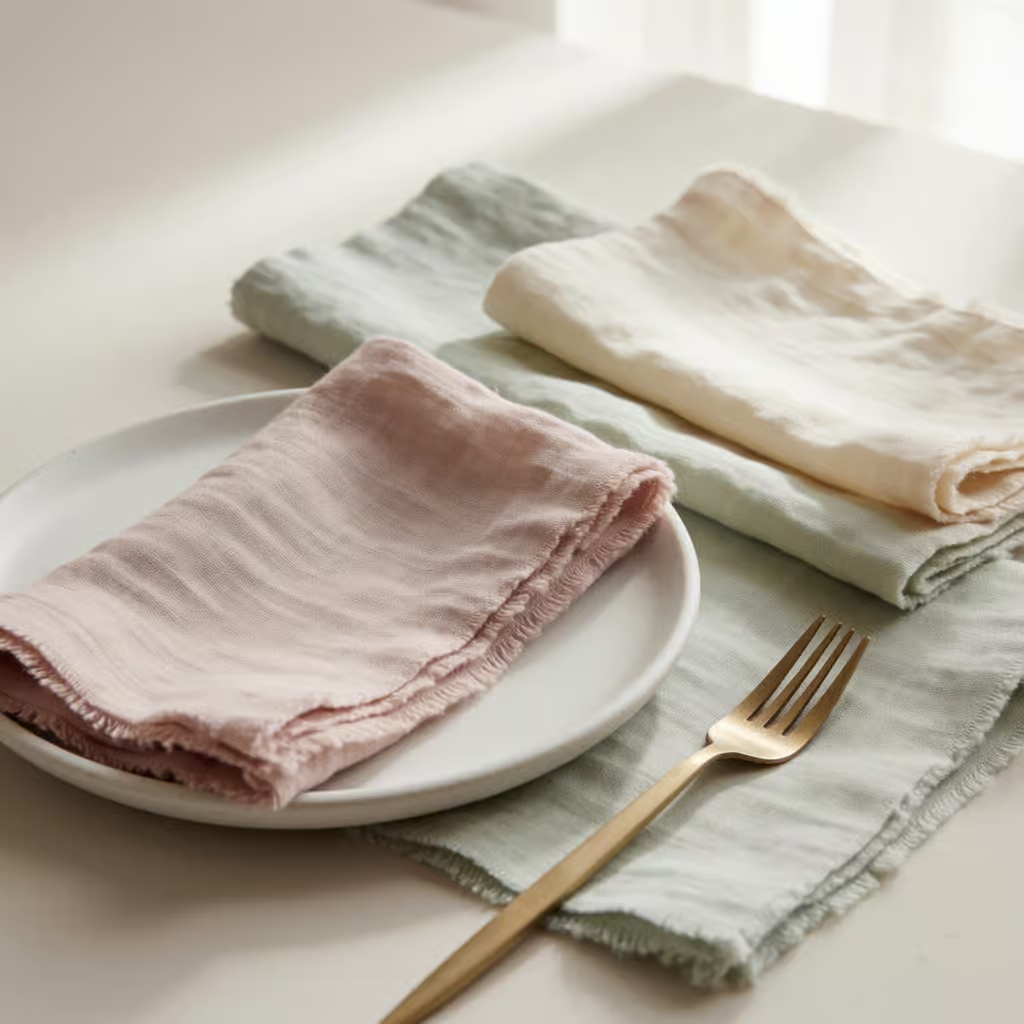
Why Napkins Transform Every Meal
Published on 15 min readTable SettingCompare AI models
A well-chosen and placed napkin can change the entire feel of a meal, especially because it signals attention to detail and makes guests feel welcome. This transformation is most visible when you use a color or texture that matches the tablecloth, creating a visual organization that makes the space more inviting. In practice, a table without this element can seem incomplete and even a bit careless, even if the rest of the dishes are spotless. The difference lies in the perception of those sitting at the table—guests who feel welcome enjoy the food and conversation more.
How to Choose the Right Napkin for an Informal Meal
An informal meal is one meant for conversation and sharing, without excessive formality. For these occasions, the ideal napkin needs to be practical and easy to use. The choice between cloth and paper defines not only practicality but also the level of care you want to convey.

I’ve tested both cloth and paper napkins at casual gatherings. I prefer cloth for its durability and reusability, but I recognize that paper is the perfect solution for those who don’t want to worry about washing afterward. The balance is knowing which occasion calls for which type. For a family Saturday lunch, I choose cloth; for a quick snack with unexpected visitors, paper works.
I’ve used the same set of cloth napkins for three consecutive dinners with friends, washing them between uses. The resource savings and reduced waste are real. A package of high-quality paper napkins lasts less than a set of cloth napkins, which you can use dozens of times. To go deeper on this point, see What AirFryer dinners combine flavor and simplicity for beginners?.
Let’s define them:
- Cloth napkins are a square of fabric, washable and reusable, used to clean hands and mouths during a meal.
- Paper napkins have the same function but are discarded after use.
Here’s an example: at a relaxed home lunch, I used light blue cloth napkins over a white tablecloth. My friends noticed the table looked tidier and said they felt more at ease chatting, just because there were no loose or out-of-place items. The texture of the cloth was also pleasant to the touch, which reinforced the welcoming feeling.
Another situation: at a quick work meeting with snacks, I opted for yellow paper napkins, easy to discard. The team appreciated the gesture, as the practicality didn’t interfere with the pace of discussions. Paper eliminated the worry about stains and washing, allowing everyone to focus on the work.
Cloth napkins require a bit more work—you need to wash and iron them after use. But this extra effort pays off because they offer an elegance that plain paper simply can’t match. The fabric drapes better over the lap, absorbs better, and doesn’t tear easily. If you have a washing machine, the process is simple: toss them in with other clothes of a similar color, iron on a warm setting, and store.
Paper napkins are the logical choice when washing isn’t an option. The downside is the waste generated. In the end, you choose the type that fits your reality and available resources. A common mistake is thinking paper napkins always look cheap—there are options with good weight and subtle prints that elevate the look without costing much.
How to Fold Napkins for an Elegant Touch Without Extra Cost
Folding napkins with care is a skill that costs nothing and completely changes the look of the table. I’ve learned to make shapes like flowers and cones, which are simple and don’t require special accessories. The secret is in the precision of the folds, not the complexity.

Sequence to make the cone shape:
- Place a square cloth napkin on the table, right side up.
- Fold it in half to form a triangle, aligning the edges neatly.
- Fold that triangle in half again to create a smaller triangle, and press the edges to mark the fold.
- Roll the triangle from one tip to the center, forming a cone. Press the final tip to secure it.
- Place the cone on the table with the opening up. If you want, add a paper flower or small decoration on top.
The most common mistake here is not aligning the corners properly, which leaves the shape lopsided. The fix is to check the alignment at each step—sometimes I use a ruler to ensure it’s straight. Another slip-up is rolling too loosely; the cone needs to have structure to stand on its own.
The flower shape is also easy. Step-by-step:
- Start with a square cloth napkin, right side up.
- Fold it in half to form a triangle.
- Fold the triangle in half again.
- Fold each of the three tips of the triangle toward the center.
- Flip the piece over and fold the three tips again toward the center.
- Gently open the "petals" and adjust the center to secure it.
This fold is perfect for Sunday lunches or celebratory dinners. It brings a joyful vibe and shows guests you’ve prepared to welcome them. I’ve used the napkin flower at a special breakfast, and the effect was immediate: everyone smiled when they saw the table.
Folding napkins is something I do while waiting for the food to be ready. It takes no more than a few minutes, and the payoff in compliments and a pleasant atmosphere is huge. To speed things up, fold all the napkins at once before starting to cook—so you’re not rushing when it’s time to serve.
There’s also the basic rectangle fold, which works when time is short. Just fold the napkin in three parts along the length and then in half. Place it next to the plate, and it’s already presentable. The important thing is never to leave the napkin crumpled as it came from the closet.
How to Combine Napkins with Other Table Setting Elements
The table setting elements are all the items used to serve and eat: plates, cutlery, glasses, and the tablecloth. To create a harmonious combination, observe color and texture. Visual harmony creates a sense of order that relaxes guests.
I’ve paired moss-green cloth napkins with clay plates, creating a rustic and relaxing vibe. Guests commented that the table looked cozier, and the texture of the clay complemented the fabric of the napkins. I used wooden cutlery to complete the look, and the result was a table that looked like it came from a country lunch.
Compare two combination options:
| Criterion | Combination 1 (blue napkin + white plate) | Combination 2 (red napkin + black plate) |
|---|---|---|
| Sensation created | Order and calm | Energy and animation |
| Occasion indicated | Informal meal | Celebratory dinner |
| Ease of finding | Easy (common colors) | Harder (black plate is less common) |
The first combination works great for casual gatherings. Blue with white conveys order and serenity, making guests more comfortable for a long conversation. I used this palette at a Sunday lunch, and the atmosphere was so calm that hours passed without anyone noticing.
The second is ideal for parties. Red and black bring vibrancy and a festive air, livening up the environment. I tested this at an anniversary dinner, and guests associated the colors with the joy of the occasion.
The tablecloth also plays a role. Its color should complement the napkin and plate. For example, if the tablecloth is red, white napkins and black plates create an elegant contrast. A practical rule: choose a dominant color (on the tablecloth or plate) and use napkins to highlight or soften it. Napkins the same color as the tablecloth can be monotonous; a contrasting tone brings life to the table.
Think about texture too. Cloth napkins with lace details pair well with fine porcelain, while rougher fabrics work well with ceramic or clay. I made a mistake once by using very thick linen napkins with fine porcelain— the rough texture seemed disproportionate. I switched to smooth cotton napkins, and harmony was restored.
For glasses and cutlery, the combination is subtler. Neutral-colored napkins (white, beige, gray) work with any cutlery color. If your cutlery is colorful or has gold details, a neutral napkin avoids visual conflict. I paired beige napkins with wooden-handled cutlery and simple glass glasses—the table was balanced and inviting.
Common Mistakes That Ruin the Atmosphere When Using Napkins
Mistake 1: Leaving napkins crumpled on the table. Symptom: The table looks messy, and guests don’t feel as welcome. Fix: Fold the napkins before placing them. Even a simple fold, like a cone, already gives a more careful look. If you’re short on time, at least stretch the napkin with your hands before placing it on the table.

Mistake 2: Using a napkin color that conflicts with the tablecloth. Symptom: The table looks visually disharmonious, causing some discomfort. Fix: Choose complementary colors. Simple palettes like blue and white rarely fail. If you’re not sure, go with neutral: white or light gray napkins pair with almost everything.
Mistake 3: Leaving used cloth napkins on the table after the meal. Symptom: It gives the impression of carelessness, as if attention to detail ended with the food. Fix: Collect used napkins immediately after clearing the table. Leaving them in a specific basket to wash avoids mess. I have a small basket in the kitchen just for this—so napkins don’t spread across the sink.
Mistake 4: Using paper napkins at celebratory dinners. Symptom: The table loses elegance and may seem underprepared for the occasion. Fix: Prefer cloth napkins for special events. Fold them decoratively, like a flower, to reinforce the festive atmosphere. If you really don’t have cloth napkins, use high-weight paper and fold them carefully.
One mistake I made: I used red napkins with a tablecloth of the same color. The table looked monotonous, without contrast, and guests thought it looked disorganized. The solution was to switch the napkins to white—the harmony was restored immediately. I learned that contrast is more important than an exact match.
I also saw a friend use paper napkins at an anniversary dinner. Guests noticed the lack of care, as the event called for something more refined. She corrected it the next time with cloth napkins folded into flowers. The difference was so great that a guest even joked, "It looks like we’re at a fancy restaurant!"
Another common mistake is placing the napkin in an inconvenient spot. The traditional place is to the left of the plate, over the fork, or inside the appetizer plate. Placing it behind the plate or far from the guest forces them to stretch, breaking comfort. I always position the folded napkin to the left, aligned with the table edge.
How to Use Existing Napkins at Home to Transform a Meal
Many people have napkins forgotten in some closet. You can reuse them to give a new look to a meal without spending anything. I’ve rescued a set of cloth napkins that had been stored for over a year for an anniversary. Just wash and iron them. The revitalization process is quick, and the impact is great.
Cloth napkins stored for months often get crumpled, but a good steam ironing fixes them—and leaves the fabric softer. If there are mold or dust stains, soak them in lukewarm water with a little white vinegar for 30 minutes before washing.
Stored paper napkins can also get crumpled, but you can disguise it with a well-folded look. The important thing is to take them out of the package carefully. If they’re too wrinkled, iron on low temperature over a thin towel placed on top—this smooths them without burning the paper. I tested this with medium-weight paper and it worked.
The next time you set the table, look first at what you already have. A forgotten napkin, after washing and folding, can be the detail that was missing to make the meal special. I’ve organized an impromptu dinner using striped cloth napkins I received and never used. I paired them with simple white plates, and guests loved the colorful pattern.
If your napkins are different colors, use that to your advantage. Mixing napkins of complementary tones on the same table creates a relaxed and fun look. At a children’s party, I used blue, green, and yellow napkins, each in a different place. The kids thought it was funny, and the adults commented on the creativity.
For paper napkins with dated prints or that you no longer like, cut them out. Use scissors to cut decorative shapes (like stars or leaves) and glue them onto plain napkins, or use the cutouts as a centerpiece for the fold. I transformed Christmas-themed paper napkins into neutral decorations by cutting out the thematic parts.
Storage also matters. Store folded cloth napkins in a dry place, preferably separated by color. To avoid permanent fold marks, alternate the direction of the folds each time you store them. Paper napkins should be kept in closed packages, away from moisture, to prevent them from sticking together.
How to Clean and Store Cloth Napkins to Last for Years
Proper cleaning extends the life of cloth napkins and keeps them looking good. First, separate by color before washing. White and colored napkins should go in separate cycles to avoid stains. Use a neutral soap or one for delicate clothes—avoid chlorine bleach, which can yellow whites and fade colors.
Water temperature makes a difference. For cotton or linen napkins, wash in lukewarm water (up to 40°C). Water that’s too hot shrinks the fabric and fades it faster. I once lost a set of colored napkins by washing them in hot water; the colors became dull.
In the machine, use the delicate cycle or for bed linens. Too-agitated cycles wear down the fibers. Rinse thoroughly to remove all soap, as residue leaves the fabric rough. If possible, air-dry them outdoors in the shade. A dryer can shrink and wrinkle them a lot; if using it, choose low temperature and take the napkins out while they’re still slightly damp.
Ironing is optional but enhances presentation. Iron at the appropriate temperature for the fabric (cotton on hot, linen on very hot, synthetics on warm). To give shine, iron on the reverse side first. Napkins with embroidery or lace details should be ironed over a soft surface (like a towel) to not flatten the texture.
Food stains are common. Treat them immediately: rinse the area with cold water, gently rub with coconut soap, and wash normally. For grease stains, use a little neutral detergent before washing. Old stains may need specific products, but test them on a small area first.
Storing also means using them carefully. Teach guests (and family) to use the napkin without rubbing too hard, which frays the fabric. After the meal, shake the napkins to remove crumbs before storing them to wash.
With these care tips, my oldest cloth napkins are over five years old and still look new. The savings from not having to buy new sets frequently are significant.
Frequently Asked Questions
Can I use paper napkins for a romantic dinner for two? It depends on the level of formality you want. For an intimate home dinner, folded cloth napkins bring an elegance that pairs with romance. Paper napkins can work if they’re high-quality, with good weight and a neutral color, but they still give a more casual feel. If the goal is to create a special atmosphere, invest in cloth napkins—the difference in touch and presentation is noticeable.
How many cloth napkins do I need so I don’t run out when washing? A basic set of 12 to 16 napkins covers most situations. With this, you can serve up to 8 people and still have clean napkins in reserve while the used ones are being washed. If you host frequently, having two sets of different colors offers flexibility to match different tablecloths and plates. My main set has 12 beige napkins, which I pair with everything, and 8 blue ones for variety.
How to choose the right size napkin? The standard size for cloth napkins is between 40x40 cm and 50x50 cm. This size is enough to clean hands and mouths without being excessive. Napkins smaller than 40 cm may be insufficient; larger than 50 cm are bulky on the table and harder to fold. For informal meals, stick to the 40 to 45 cm range. I’ve tested 60 cm napkins and found them disproportionate—they took up too much space and interfered with cutlery.
Are recycled paper napkins a good option? Yes, they’re a more sustainable option than regular paper napkins. However, the texture is usually rougher and the weight is lower, which can affect absorption and the feel when using. If you choose recycled, look for brands that specify a higher weight (over 30 g/m2) for better durability during the meal. I’ve used recycled napkins at a picnic and they worked well, but at home I prefer cloth for reusability.
*This text is for informational purposes only and reflects personal experiences. For specific etiquette or decoration advice, consult a professional in the field.*
Read also
- How to create effective rules to limit kids' screen time
- How to create effective rules to limit kids' screen time
- What AirFryer dinners combine flavor and simplicity for beginners?
Frequently asked questions
Which is better for a casual lunch: cloth napkins or paper napkins?
For a casual lunch, like a Saturday with family, cloth napkins are a good choice because they offer elegance, durability, and the ability to be reused. For more practical situations, like a quick snack with unexpected visitors, paper napkins work well since they're disposable and eliminate the worry of washing.
How to fold napkins easily and elegantly?
Folding napkins neatly, like into a cone or flower, is a simple skill that doesn't need accessories. The secret is in the precision of the folds and aligning the corners well at each step so the shape doesn't turn out twisted. These decorative folds completely change the look of the table and give off a sense of care and preparation.
How to match napkin color with the table to avoid mistakes?
Look at the color and texture of other elements, like the tablecloth and plates, to create visual harmony. To avoid conflicts, a practical rule is to choose a dominant color and use the napkins to highlight or soften it, preferring contrasting tones to bring life to the table. Neutral-colored napkins, like white or beige, go with almost everything and prevent the table from looking monotonous.