
Squishies for stress relief: what they can (and can't) do for you
Published on Updated on 4 min readSquishiesCompare AI models
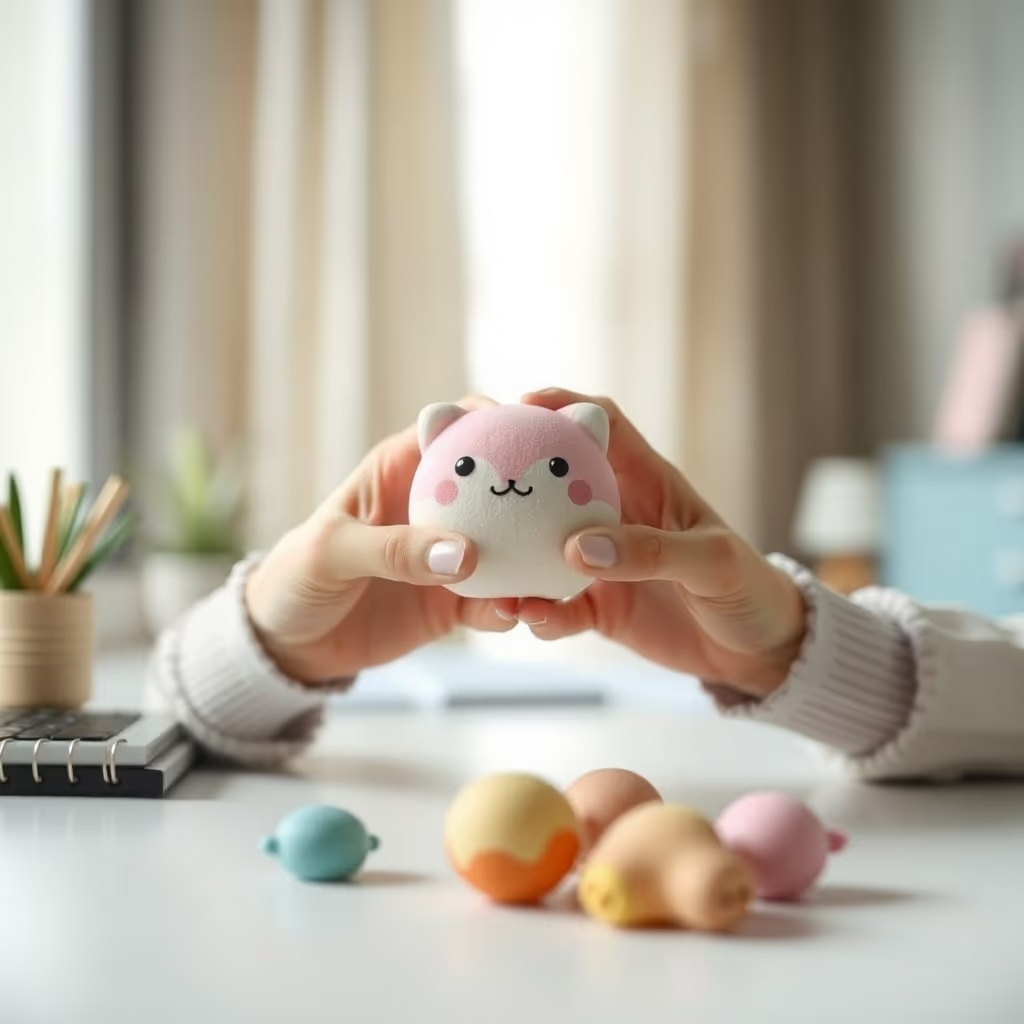
Squishies were born as toys, but they've grown up on office desks and in school pencil cases as "decompression" objects. Does that make sense? Largely, yes — but the subject deserves an honest conversation, with no miracle promises. This article explains why squeezing something soft is so pleasing, how to make the most of that in daily life and where the limits are.
This text is educational content about a hobby, not health guidance. A squishy does not treat anxiety, chronic stress or any condition — if stress is genuinely weighing on you, see a health professional.
Why squeezing is calming
Without inventing any science, we can point to simple, observable mechanisms in everyday use:
- Motor release: tension tends to build up in hands, shoulders and jaw. Rhythmically squeezing and releasing gives that restlessness a physical outlet — the same logic as doodling in a notebook margin or clicking a pen, only quieter and more pleasant.
- Sensory focus: while you pay attention to the texture sinking and returning, your attention steps out of the stream of worries for a few seconds. It's a sensory anchor, similar to what happens when kneading putty.
- A pause ritual: the gesture of picking up the squishy can mark a deliberate micro-break — and short, frequent breaks tend to work better than rare, long ones.
- The pleasure of slowness: slow-rising models carry a built-in invitation to wait for the piece to come back before the next squeeze, which naturally slows the pace of your hands and your breathing. We explain the mechanics in the article on how slow rising works.
How to use one day to day (practical suggestions)
The three-squeeze break
Between one task and the next: three full squeezes, releasing slowly and waiting for the piece to rise completely before the next one. Under thirty seconds, and it works as a mental divider between activities.
Call companion
Video meetings leave hands idle and heads racing. A squishy just out of frame keeps your hands busy without a sound — a clear advantage over clicky pens and drummed-on keyboards.
Study kit
For students, a squishy works well as a "block reward": finish your 25 minutes of focus, earn 2 minutes of squeezing. For some children, having something in their hands helps them listen better; for others, it's a distraction — worth observing case by case, with no universal rule.
The breathing squishy
Synchronize: squeeze as you inhale, release along with the foam's rise as you exhale. With a slow-recovery squishy, the cycle lengthens naturally.
What a squishy doesn't do
Here honesty matters more than enthusiasm:
- It doesn't solve the cause of any stress — a deadline is still a deadline, a bill is still a bill.
- It doesn't replace sleep, real breaks, movement, human connection or professional help.
- It is not a certified therapeutic tool. If you've seen "cures anxiety" promises in a toy ad somewhere, be suspicious of the ad, not of your anxiety.
The squishy's realistic role is that of a good small ritual: cheap, harmless and pleasant. That's already quite a lot — as long as nobody sells it as more than it is.
Why the homemade one comes with a bonus
Anyone who makes their own stress toy wins twice:
- The process itself is relaxing. Cutting, sanding and painting by hand, following the basic recipe, is an absorbing activity in its own right — hours of quiet attention before the piece is even finished.
- Real attachment. A squishy you shaped and painted carries a story. The lopsided piece from your first attempt becomes the favorite — and the mistakes along the way become know-how.
For heavy desk use, choose voluminous, sturdy shapes (ball, bread roll, cube — the first ones on our shape list) and take extra care sealing the paint, because daily squeezing wears it down fast.
Common-sense precautions
- Squeezing too hard damages the piece and, in excess, tires your own hand — the relaxing gesture is the gentle, rhythmic one.
- A desk squishy collects grime from hands; regular cleaning keeps your relaxation object from becoming a stain farm — the right method is in how to clean and store squishies.
- In environments with small children, the rules of our safety guide apply.
---
Want to build your own stress-relief kit? The ebook Homemade Squishy, in production, dedicates a chapter to pieces for daily use — shapes, densities and finishes that stand up to real squeezing. Subscribe to the blog to follow the launch.
Frequently asked questions
Can squishies actually help with stress?
Yes, they can provide a calming effect through simple, observable mechanisms. Squeezing offers a physical outlet for tension, acts as a sensory focus to briefly divert attention from worries, and serves as a ritual for a deliberate micro-break. However, they do not solve the underlying causes of stress or replace professional help.
How can I use a squishy effectively during the day?
You can use it for short breaks, like taking three full squeezes between tasks to create a mental divider. It can also serve as a quiet call companion during video meetings to keep hands busy, or as a study reward after a focused period. Synchronizing squeezes with your breathing, especially with a slow-rising model, can naturally slow your pace.
Are there any downsides or things squishies can't do?
A squishy does not address the root cause of stress, such as deadlines or bills. It is not a replacement for sleep, real breaks, movement, human connection, or professional help, and it is not a certified therapeutic tool. Its realistic role is as a pleasant, harmless small ritual, not a solution for anxiety or chronic stress.