
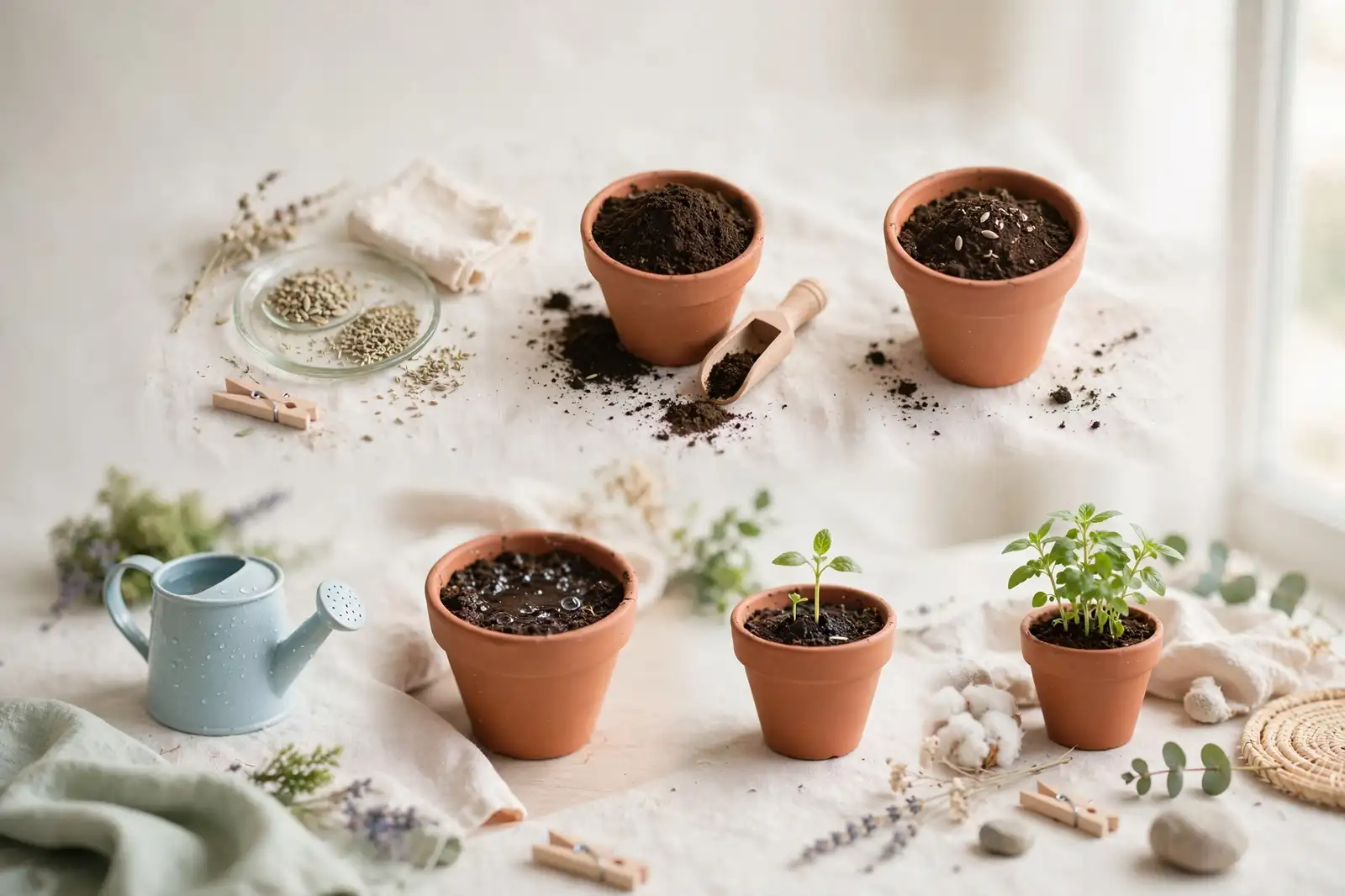
7 Steps to Start a Small Apartment Garden for Beginners
Published on 7 min readHome and GardenCompare AI models
Starting an apartment garden takes 7 steps, and the first is choosing three fast-growing plants. Lettuce, parsley, and cilantro are the best for beginners because they adapt to low light. You just need pots with drainage holes and a corner that gets at least 4 hours of sunlight a day — if not, grow lights work. For example, lettuce can be harvested leaf by leaf for up to two months.
How to Choose the First Plants for Your Apartment Garden?
The choice of first plants ensures beginner success. Garden plants are those grown for eating, like herbs and leafy greens. You need quick results to stay motivated. Opt for fast-growing plants that tolerate partial sun, as apartments rarely get full sun all day. I started with lettuce, parsley, and cilantro, and it was the best decision.
Lettuce grows quickly: you can harvest outer leaves in 3–4 weeks, and the base continues producing for up to 60 days. Parsley is hardy, regrows after cutting, and lasts months on a windowsill if you only harvest larger stems. Cilantro is versatile, fits in a 15cm-diameter pot, and goes straight from the pot to the pan in 6–8 weeks. My tip: stick to these three. A common mistake is starting with tomatoes, which take over 100 days to fruit, need full sun, and even require manual pollination indoors.
How to Prepare Plastic Pots for Your Garden?
Plastic pots are just containers to hold soil and plants, but they need holes in the bottom for water drainage. They’re the cheapest and most practical option, especially for beginners. Preparing a pot is easy.

First, make holes in the bottom. Without them, water builds up and rots the roots. I use a heated nail over the stove for 30 seconds — it’s faster than a drill and won’t break the plastic. Just heat it and press, making 4–6 holes. Then, line the bottom with a 2cm layer of pebbles or broken eggshells. This prevents soil from clogging the holes. Broken eggshells are something you already have at home, so it’s pure recycling.
You can find more details in tips for choosing the right pots. I love recycling: 2-liter ice cream containers, 2-liter PET bottles cut in half. Just drill holes in the bottom. It’s affordable and sustainable. The most common mistake I see is planting directly in a pot without a hole. The plant drowns in a week. Always check.
How to Find a Good Spot for Your Garden in the Apartment?
A good spot gets enough sunlight and is protected from strong winds. Light is essential — it’s how plants get energy. The ideal is a spot with at least 4 hours of direct sun. East-facing windows (which get morning sun) or south-facing windows work well. A balcony facing south is perfect.

If your window is dark and gets less than 2 hours of sun, supplement with LED grow lights. These are tabletop lights that mimic sunlight. I bought a 10-watt one cheaply online. I used it in a sunless apartment, leaving the light on for 6 hours a day on a timer, 30cm above the plants. The cilantro and parsley grew normally. Watch out for strong wind from open windows — it breaks new leaves and knocks over light pots. Place pots inside the window or in a sheltered corner of the balcony.
How to Care for Your Plants Daily?
Daily care involves watering, fertilizing, and weeding. These are simple tasks, but neglect will stop your garden from thriving. Water only when the soil is dry. Stick your finger in up to the second knuckle, about 3cm. If it comes out clean and not caked with soil, you can water. Always water at the base, until water drains through the holes — never on the leaves, as wet leaves develop fungus.

Fertilize every 15 days. Nutrients like nitrogen and potassium are the plant’s fuel. Use organic fertilizer: composted chicken manure or ready-made liquid fertilizer. For a medium pot, 1 tablespoon of granular manure is enough. Pull weeds by hand. They steal water and food from your plants. Do this weekly before they spread. I fertilize with composted chicken manure — it’s natural, cheap, and doesn’t smell bad. I buy a 1kg bag that lasts for months.
The biggest mistake is overwatering. Soil that’s waterlogged for more than two days suffocates the roots. Touch the soil before watering. If in doubt, wait another day.
How to Fix the Most Common Problems?
Mistakes happen, but you can fix them if you catch them early. Check your plants every day. Yellow leaves at the base usually mean overwatering. Solution: water less, wait for the soil to dry out, and check the pot’s holes. If needed, place the pot in a well-ventilated area for a day to dry faster.
Slow growth and small leaves indicate lack of light or nutrients. Move the garden to a brighter spot or fertilize with liquid manure. The grow light also helps — leave it on for 8 hours. Brown tips and dry leaves signal dry air, common with air conditioners. Mist the leaves once a day in the morning or place a shallow dish of water near the pots to increase humidity.
I saved a parsley plant with yellow leaves by moving it to a spot with less afternoon sun and watering every three days instead of daily. It was green again in a week. Another issue: if new leaves are very pale, it’s a lack of nitrogen. A humus fertilizer fixes it in 10 days.
How to Expand Your Garden Without Spending Money?
You can grow your garden for free. Use what you already have at home. Recycled glass jars make charming pots. 500ml jelly jars or olive jars — just wash them well and drill holes in the bottom with a glass bit. They look nice on the kitchen window.
Save your own seeds. Let a parsley stem flower and dry it for a month, then store the seeds in a paper envelope. Next season, you’ll have free seedlings. For cilantro, take cuttings: cut a 10cm stem, remove lower leaves, and place it in a cup of water for 15 days until roots form.
Make compost from kitchen scraps. Banana peels, coffee grounds, and dry leaves turn into rich soil in 2–3 months. It’s sustainable and free. Use a lidded bucket with holes. The ebook 'How to Start an Apartment Garden from Scratch' has more ideas, including how to build a compact two-tier compost bin.
Steps to Start a Small Apartment Garden
- Choose 3 fast-growing plants (lettuce, parsley, cilantro). Check if they tolerate partial sun.
- Prepare plastic pots with holes in the base and a layer of pebbles. Use recycled pots to save money.
- Find a spot with at least 4 hours of sunlight a day. If sunlight is limited, use grow lights.
- Water plants only when the soil is dry to the touch. Water at the base to avoid wet leaves.
- Fertilize plants every 15 days with organic fertilizer. Use composted chicken manure for best results.
- Regularly remove weeds by hand. Use no chemicals to keep it natural.
- Fix common problems early. Check plants daily to spot issues like overwatering or dry air.
Comparison Between Plastic and Glass Pots for Apartment Gardens
| Criterion | Plastic Pots | Glass Pots |
|---|---|---|
| Cost | Low (especially recycled) | Low (if recycled) |
| Weight | Light (easy to move) | Heavy (hard to move) |
| Drainage | Easy (with holes in the base) | Easy (with holes in the base) |
| Decorative | Little (but can be painted) | Yes (adds an elegant touch) |
| Sustainability | Yes (if recycled) | Yes (if recycled) |
The next step is to get your hands dirty: choose your plants today, prepare a 2-liter recycled pot, and place it on the window that gets the most morning sun. Practice teaches more than any guide.
*This text is for informational purposes only and does not replace professional gardening or agronomy advice.*
Frequently asked questions
Can I grow tomatoes in a small apartment?
Tomatoes are hard to grow in a small apartment because they need a lot of sun and space. You can try with dwarf varieties, but it's less recommended for beginners.
How often should I water my apartment garden plants?
You should water the plants when the soil is dry to the touch. This varies depending on the climate and sun exposure, but it's usually once a day in summer.
Can I use garden soil in my apartment garden pots?
Garden soil isn't recommended for apartment garden pots because it can contain pests and doesn't have proper drainage. You should use potting soil.