
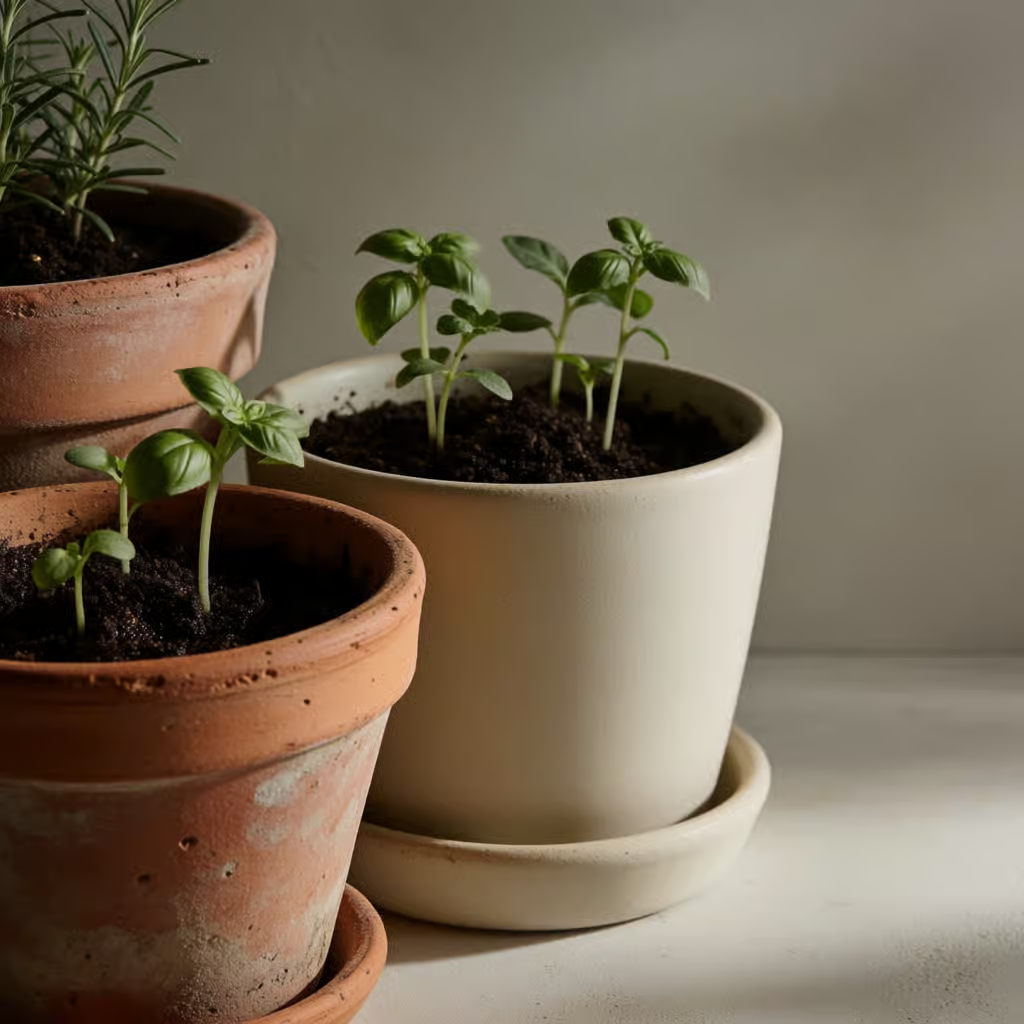
How to Choose the Right Pots for Apartment Gardening Without Mistakes?
Published on 7 min readHome and GardenCompare AI models
For apartment gardening, pots need drainage holes at the bottom and a minimum volume of 5 liters, especially for lettuce and parsley. This size prevents soil waterlogging and gives roots room to grow. In small spaces, recycled plastic pots are often the most practical choice because they’re lightweight and easy to move to catch light.
How to Check if a Pot Has Proper Drainage?
Drainage is the pot’s ability to remove excess water, protecting roots from rotting. The check is simple: flip the pot and look for holes at the bottom. To go deeper on this point, see Unmasking Crochet Myths for Beginners.
Each hole should be at least 1 centimeter in diameter. If holes are too small or nonexistent, water will pool.
A practical test: pour a cup of water into an empty pot. If water takes more than a minute to start draining, drainage is insufficient.
Pots without holes, like decorative vases, can be adapted. Use a drill with a 1 cm bit and make at least three holes evenly distributed at the bottom.
What’s the Minimum Pot Volume for Each Type of Garden Plant?
The pot volume determines how much soil—and thus nutrients and water—the plant has access to. Needs vary.
For lettuce, the minimum is 5 liters. With less space, leaves won’t develop fully, and the plant may bolt early, becoming bitter.
Parsley also needs 5 liters. In small pots, it grows stunted, with thin stems and few leaves for continuous harvesting.
Sage can grow in 3 liters, but if you want a robust plant that lasts months, start with a 5-liter pot.
Cherry tomatoes require more: a minimum of 10 liters per plant. In smaller pots, fruit production is minimal. Always grow one seedling per pot of this size.
Mini cucumbers, the variety suited for pots, also need 10 liters. As climbing plants, they need a trellis—like a bamboo stake—installed at planting.
How to Choose the Pot Material for Small Spaces?
The material affects weight, durability, and how the pot regulates soil moisture and temperature.
Plastic pots are lightweight and affordable. This lightness is a big advantage in apartments, where you may need to rotate the pot or move it from a window to follow the sun. Opt for recycled plastic, which performs the same and is more sustainable.
Clay or ceramic pots are heavy and porous. They retain moisture longer, which can help forgetful waterers, but they’re hard to move. Note: in very cold places, retained water can freeze and crack the pot.
Avoid metal pots for gardening. They heat up the soil too much in strong sunlight, literally cooking the roots. Additionally, they rust over time, even with a protective coating.
How to Adapt Pots to Different Areas of the Apartment?
Location determines the light and ventilation the plant gets, requiring care adjustments.
In south-facing windows (direct sun), soil dries quickly. Always use a saucer under the pot to avoid staining the windowsill, but empty accumulated water daily to prevent mosquito attraction. This is the ideal spot for tomatoes and lettuce.
North-facing windows (indirect light) are perfect for herbs like sage and parsley, which burn in direct sun. Here, the pot can stay fixed.
In closed balconies (sunrooms), air circulation is poor. Open windows for a few hours daily to ventilate and prevent fungal growth.
In open balconies, rain can be a problem. On rainy days, cover the pot with a plastic bag to avoid overwatering.
Inside the living room, choose spots near windows. Dark corners are terrible for any garden—plants become leggy, reaching desperately for light.
What Are Common Mistakes When Choosing Pots for Apartment Gardening?
The most common mistake is ignoring drainage. A pot without a hole suffocates the plant. The symptom is yellowing leaves that don’t improve with watering. The solution: drill holes or replace the pot.
Choosing too small a pot is another classic. The plant stops growing, turns yellow, and doesn’t produce. The fix is transplanting to a pot of at least 5 liters.
Using a metal pot in a sunny spot burns roots. The soil feels hot to the touch. Replace it with a light-colored plastic or ceramic pot, which reflects more heat.
Forgetting the saucer stains floors and furniture. Buy a plastic saucer of the right size—not necessarily from the same store as the pot.
Dark-colored pots, especially black ones, absorb a lot of heat. In hot windows, opt for light colors like white, beige, or light gray.
How to Prepare a Pot for Planting in an Apartment?
Following a sequence avoids basic mistakes that harm growth from the start:

- Select the pot: Start with a 5-liter pot with drainage holes. Beginners often underestimate the required size.
- Position the saucer: Place the saucer before adding soil. It’s common to remember it only after overwatering that ruined the floor.
- Use the right substrate: Fill the pot with specific garden soil or seedling mix. Garden soil can bring pests and weed seeds into the home.
- Make a hole: With your finger, create a hole in the soil the size of the seedling’s root ball. Holes that are too deep bury the stem, which can rot.
- Plant and firm: Place the seedling and press soil around it with your fingers. Don’t compact heavily—just to remove air pockets and stabilize the plant.
- Initial watering: Water thoroughly until water drains into the saucer. This settles the soil. For daily watering, the amount will be smaller.
When watering, room-temperature water is better than cold tap water, which can shock the roots.
What Are Alternatives to Traditional Pots for Apartment Gardening?
Reusable containers can be great options, but with caveats. The comparison below shows practical differences:

| Criterion | Traditional plastic pot | PET bottle | Wooden box |
|---|---|---|---|
| Common volume | 5–10 liters | Up to 2 liters (side-cut) | Easily 10 liters or more |
| Drainage | Holes pre-made | Easy to drill with hot metal | Easy to drill, but wood rots |
| Weight | Light | Very light | Very heavy when full of soil |
| Durability | High, several years | Medium, plastic degrades with sun | Low, rots with constant moisture |
PET bottles are good for short-cycle herbs or starting seedlings. Cut them in half, drill holes, and use the bottom as a pot.
Wooden boxes, like market crates, are pretty but problematic. Even with a perforated plastic liner, moisture eventually rots the wood. They’re more of a temporary solution.
Yogurt or margarine containers are ideal for sowing sage or arugula. Just don’t forget to drill a hole in the bottom with a heated nail.
Frequently Asked Questions
Can I use one large pot to plant multiple species together? You can, but it’s a bad idea for gardening. Each plant has different water and nutrient needs. For example, planting lettuce with cherry tomatoes will harm one of them. Lettuce needs constant watering, while cherry tomatoes prefer soil to dry out slightly between waterings. It’s safest to use separate pots.
How often do I need to change the soil in the pots? Soil or substrate loses nutrients and compacts over time. For most short-cycle greens like lettuce and arugula, a new soil for each planting is enough. For perennial plants that stay in the same pot for years, like parsley, do a partial renewal every six months. Carefully remove the plant, replace a third of the old soil with new substrate, and replant.
*The text provides general information on container gardening. For specific plant or problem diagnoses, consult a professional agronomist or gardener.*
Read also
- Why Wrong Yarn Winding Causes Crochet Breaks and How to Fix It
- Debunking Crochet Myths for Beginners: Create Beautiful Pieces Without Skill
Frequently asked questions
How do I know if the pot drains water properly?
Turn the pot over and check if there are holes in the bottom, each at least 1 centimeter in diameter. You can do a test by pouring a cup of water into the empty pot; if the water takes more than a minute to drain, the drainage is insufficient. Pots without holes can be adapted with a drill.
What's the best material for a pot in an apartment?
Plastic pots, especially recycled ones, are the most practical option because they're light and easy to move to catch light. Avoid metal pots, as they heat up the soil too much in the sun and can burn the roots, plus they rust.
Can I plant multiple things together in the same big pot?
It's a bad idea for gardening because each plant has different water and nutrient needs. For example, lettuce and cherry tomatoes have opposite watering requirements, which will harm one of them. The safest thing is to use separate pots for each species.