
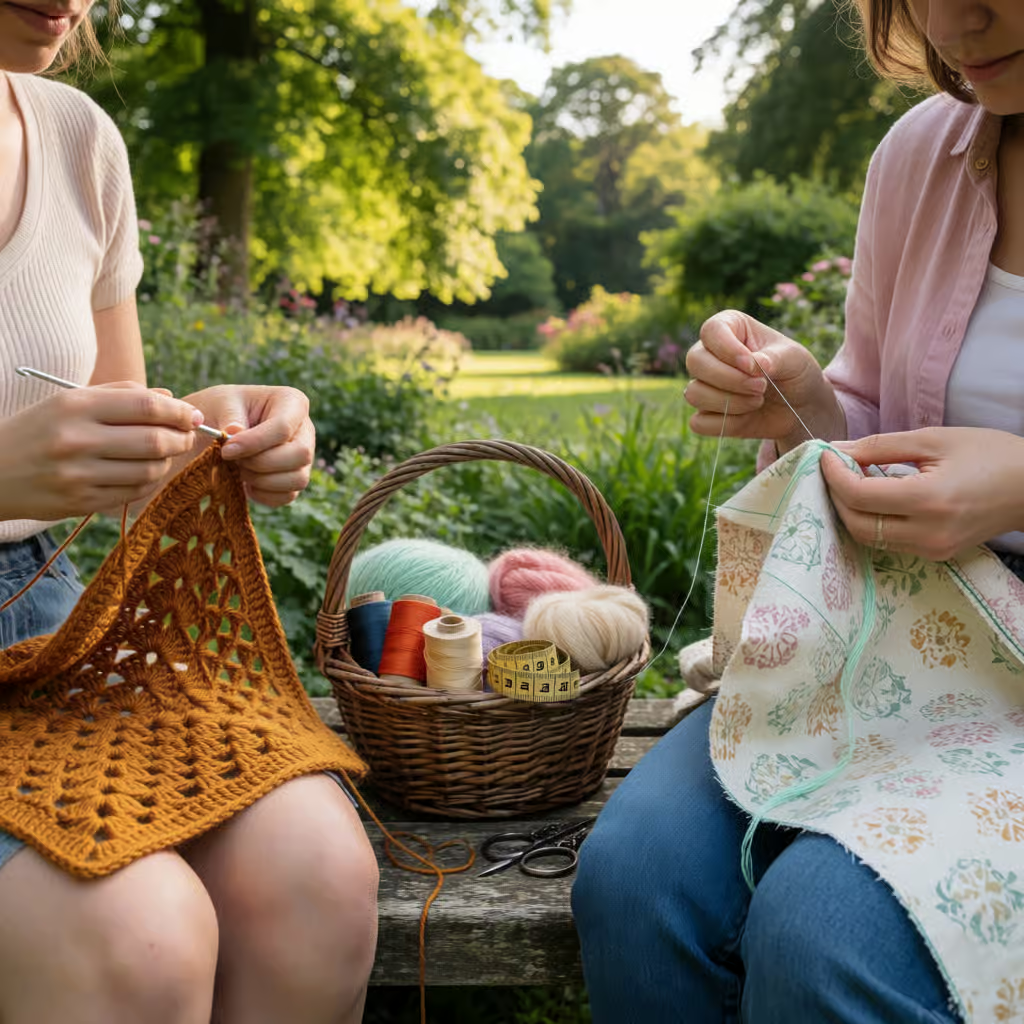
Crochet vs. Sewing: Which Craft Is Better to Learn First?
Published on 8 min readCraftCompare AI models
For a complete beginner, crochet is the better hobby to start with because you'll see results much faster. You can realistically finish a simple scarf after just two days of practicing the basic stitch. Sewing has a steeper initial learning curve, as you need to coordinate a machine and your hands, which often takes more than three days to produce a first project like a pillow cover.
How does crochet work for beginners?
Crochet is a technique where you use a single hook to pull loops of yarn through other loops, creating fabric. I began with a size 5 hook and a medium-weight cotton yarn because they’re forgiving and easy to grip. The core process is forming a starting loop and then working a series of fundamental stitches.
You only need two things to start: a hook and a skein of yarn. I found that a size H/5mm hook and a worsted-weight yarn is the most common and versatile beginner setup.
The learning is cumulative. You master one stitch, like the single crochet, and then the next one builds directly on that skill. A huge advantage is that if you spot a mistake a few stitches back, you can easily unravel just to that point and fix it without starting over.
My first project was a scarf, and I made the classic error of pulling my yarn too tightly. The fabric came out rigid and stiff. Once I learned to relax my grip and maintain looser tension, the stitches became even and the fabric had the right drape.
How does sewing work for beginners?
Sewing is the craft of joining pieces of fabric together using thread and a needle, either by hand or with a machine. I recommend starting on a machine for any project bigger than a small repair; it’s simply more efficient. The biggest initial hurdle is the hand-foot coordination required to control the machine’s speed with a pedal while guiding the fabric.
The startup kit for sewing is more extensive. At minimum, you need a sewing machine, thread, scissors, fabric, and the correct needles for your material. I used a basic mechanical machine with just a few straight and zigzag stitches.
Learning means getting comfortable with the machine itself. You have to learn to thread it correctly, adjust the tension for different fabrics, select the right needle, and feed the fabric smoothly. It took me longer to feel in control with sewing than with crochet because I was managing multiple variables at once.
In practice, sewing is rarely a good fit if you get frustrated quickly. I almost quit on my first throw pillow cover because I kept sewing the fabric panels together with mismatched edges, resulting in a lopsided shape.
What are the first viable projects in crochet?
Your first crochet projects should be small, use one basic stitch, and have a simple shape. They build confidence through repetition. A rectangular scarf is the quintessential starting point.

Here are the steps to make a basic scarf:
- Create a starting chain. A common mistake is making these foundation chains too tight, which makes the first row of stitches difficult to work into.
- Work rows of single crochet stitches into the chain. Beginners often have uneven tension at this stage, making some stitches tighter than others.
- Continue until the scarf reaches your desired length. It’s easy to accidentally add or drop a stitch at the end of a row, so counting your stitches each time helps keep the edges straight.
- To finish, cut the yarn, pull the end through the last loop, and weave in the tail. If you don’t weave the end in securely, the last few stitches can unravel.
Another great first project is a simple beanie worked in the round. It uses the same single crochet stitch but teaches you how to create a circular shape. I moved to a beanie after my scarf, which was a natural next step. To go deeper on this point, see What's the First Practical Step to Turn Yarn into Simple Crochet.
What are the first viable projects in sewing?
Beginner sewing projects should involve mostly long, straight seams and minimal pattern pieces. A basic envelope-style pillow cover is a standard first project because it teaches you to sew a straight line and create a finished product.
This cover involves cutting two identical rectangles of fabric and sewing them together on three sides. I used plain cotton because it doesn’t stretch and feeds evenly under the machine presser foot. Even a straight stitch requires focus to keep the fabric aligned and the seam allowance consistent.
A cloth baby bib or a simple tote bag are other viable starters. They introduce gentle curves and maybe a strap, but the core skill is still controlling the machine to sew straight lines.
Sewing demands more upfront precision than crochet. You must measure and cut the fabric accurately before you even start sewing. I ruined my first attempt at a bib by not cutting the two fabric layers to the exact same size, so they didn’t line up during sewing.
How to choose between crochet and sewing based on available time?
Your available daily practice time is a major factor. Crochet is inherently more portable and forgiving of short, sporadic sessions. I completed my first scarf with just two days of dedicated, focused practice.

Sewing requires more dedicated blocks of time, especially at the beginning. You need time to set up the machine, prepare the fabric, and then sew. My first pillow cover took three days from cutting to final stitch because I was learning each step as I went.
If you only have 15-20 minutes a day, crochet is the clear choice. You can keep your yarn and hook in a bag, practice a few rows anywhere, and see steady progress. I practiced during my lunch breaks when I was starting.
If you can regularly carve out an hour or more for a crafting session, then sewing becomes a feasible option. You’ll need those longer sessions to go through the entire workflow without feeling rushed. Even with 30-minute daily sessions, my progress with sewing was slower at first.
What are the common mistakes beginners make in crochet and sewing?
In crochet, the most frequent error is working with inconsistent tension, usually too tight. This makes the fabric stiff and your hands tire quickly. The fix is to consciously relax your grip and maybe use a slightly larger hook until your tension evens out.
Another common crochet mistake is losing count of stitches in a row, which makes your project skew inward or outward. The simple fix is to place a stitch marker in the first and last stitch of each row until you can recognize them by sight.
For sewing beginners, a major mistake is not securing the threads at the start and end of a seam, which leads to unraveling. Always backstitch for a few stitches or use your machine’s lockstitch function.
Using the wrong type of needle for your fabric is another easy error. A universal needle might skip stitches or tear delicate fabric. The fix is to match the needle to the material—a ballpoint needle for knits, a sharp needle for wovens.
How do I move forward after choosing a hobby?
Once you’ve picked a craft, consistent practice on small projects is the only way to improve. Gradually increase the complexity of what you make as each new skill feels comfortable.
For crochet, after mastering a scarf and beanie, you might try a project that increases and decreases stitches, like a simple amigurumi figure or a granny square blanket.
For sewing, after a pillow cover, move to a project with a zipper or elastic, like a simple pouch or a skirt with a drawstring waist. These introduce new techniques one at a time.
Connecting with other crafters, either locally or in online communities, is invaluable for troubleshooting and inspiration. I learned how to properly weave in my crochet ends from a tip in a Facebook group.
Here’s a direct comparison to help summarize the key differences:
| Criterion | Crochet | Sewing |
|---|---|---|
| Time to First Project | About 2 days | 3+ days |
| Startup Cost | Low (hook + yarn) | Higher (machine, fabric, tools) |
| Initial Coordination | Hands only | Hands, feet, and machine |
| Early Projects | Scarf, beanie, coasters | Pillow cover, tote bag, simple bib |
The best next step is to buy a single ball of yarn and a hook, or a quarter-yard of quilting cotton and some thread, and start your very first project tonight.
*This content is for informational purposes only and is not a substitute for professional instruction. Always follow safety guidelines for your tools and materials.*
See also
Frequently asked questions
Can a beginner learn crochet and sewing at the same time?
You can learn crochet and sewing at the same time, but it's more difficult. That's because you have to split practice time between the two hobbies. You can start with one hobby and then learn the other.
How much does it cost to put together an initial crochet kit?
An initial crochet kit is cheap. A hook and a ball of yarn cost about R$20 in common stores. You don't need anything else to start.
How much does it cost to put together an initial sewing kit?
An initial sewing kit is more expensive. A basic sewing machine, needles, thread, scissors, and fabric cost about R$200 in common stores. You need all these materials to start.